

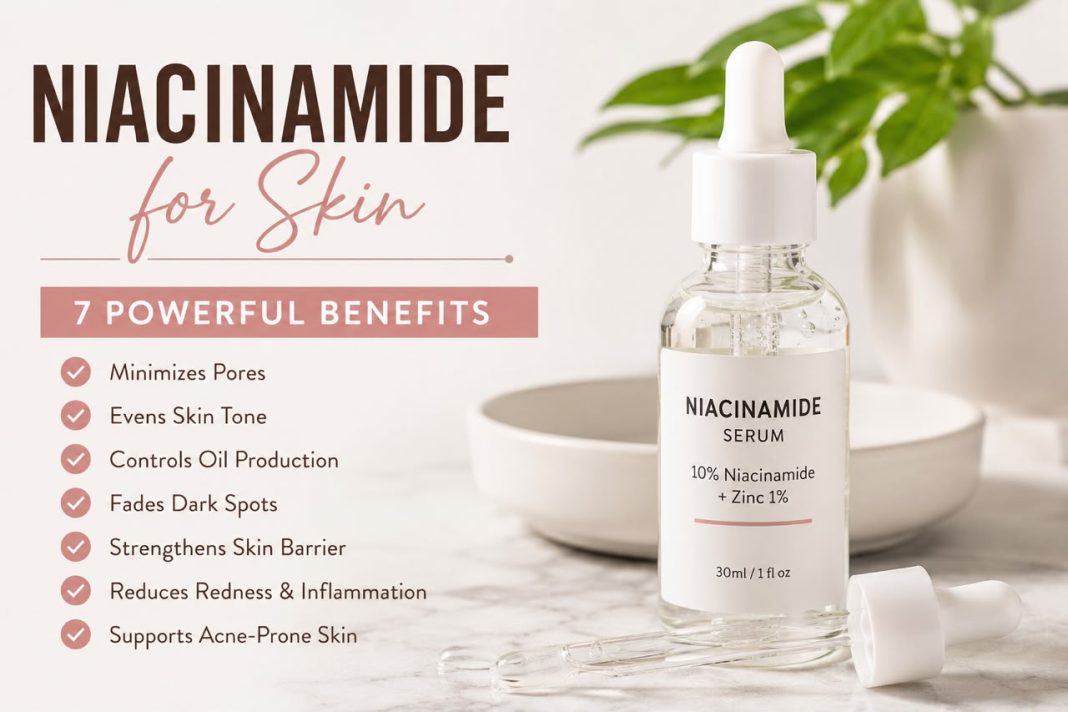
Niacinamide for skin is a popular skincare ingredient that can help support the skin barrier, control excess oil, improve uneven skin tone, reduce the appearance of dark spots, and improve the look of fine lines. Also known as nicotinamide, niacinamide is a form of vitamin B3 used in many serums, moisturizers, cleansers, and other skincare products.
Research has found that topical niacinamide can support the skin barrier and may improve pigmentation, redness, texture, and signs of skin aging. It is also generally well tolerated when used topically.
What Is Niacinamide for Skin?
Niacinamide is a form of vitamin B3 used in topical skincare products. Unlike niacin, another form of vitamin B3, niacinamide does not typically cause the flushing associated with niacin.
In skincare, niacinamide is valued for its anti-inflammatory and barrier-supporting properties. Research suggests that topical niacinamide can influence processes involved in skin barrier function, pigmentation, inflammation, and sebum production.
7 Powerful Benefits of Niacinamide for Skin You Should Know
- Niacinamide Helps Support the Skin Barrier
- Research has found that niacinamide can support the skin barrier by increasing important components such as ceramides. You can read more about niacinamide and skin barrier research in the published study.
- If your skin barrier is already damaged, you may also want to learn how to repair a damaged skin barrier naturally and build a gentle skincare routine.
A healthy skin barrier helps keep moisture in and protects the skin from external irritants.
Niacinamide may support the production of ceramides and other components involved in the epidermal barrier. This can help improve the skin’s ability to retain moisture and maintain a healthy surface.
This makes niacinamide a useful ingredient for people who experience dryness, sensitivity, or a weakened skin barrier.
- Niacinamide Can Help Control Excess Oil
Excess sebum can contribute to a shiny complexion and clogged pores. Some studies have found that topical niacinamide can reduce sebum production on the skin.
For people with oily or combination skin, a niacinamide serum may help create a more balanced-looking complexion.
- Niacinamide May Help Reduce the Appearance of Dark Spots
Niacinamide has been studied for its effect on hyperpigmentation. It can interfere with the transfer of melanosomes, which carry pigment from melanocytes to surrounding skin cells.
Clinical research has found improvements in hyperpigmentation with topical niacinamide formulations.
This can make niacinamide useful for people dealing with uneven pigmentation and post-inflammatory dark marks.
- Niacinamide Can Help Calm Skin
Niacinamide has anti-inflammatory properties that may help reduce the appearance of redness and irritation.
Research has examined topical niacinamide for inflammatory skin conditions, including acne, and has found evidence of potential benefits.
However, persistent redness or inflammation should be assessed by a dermatologist because several skin conditions can cause similar symptoms.
- Niacinamide May Help Improve the Appearance of Fine Lines
Niacinamide is also used in anti-aging skincare.
Clinical studies have found that topical niacinamide can improve the appearance of fine lines, wrinkles, elasticity, texture, and uneven pigmentation. One review reported positive results from formulations containing 5% niacinamide after regular use.
It will not stop natural aging, but consistent skincare and sun protection can help maintain healthier-looking skin.
- Niacinamide Can Improve Uneven Skin Tone
Uneven skin tone can make the complexion look patchy or dull. Niacinamide for skin may help improve the appearance of uneven pigmentation by reducing the transfer of melanin to surrounding skin cells.
Research has found that topical niacinamide can improve the appearance of hyperpigmentation with consistent use.
For better results, use niacinamide consistently and apply sunscreen during the day. Sun exposure can worsen existing pigmentation and contribute to new dark spots.
- Niacinamide May Support Acne-Prone Skin
Niacinamide can be useful for acne-prone skin because of its anti-inflammatory properties and potential ability to help regulate excess oil.
It may help reduce the appearance of redness associated with breakouts and support a more balanced-looking complexion. Some research has also examined topical niacinamide as an option for acne management.
If you have persistent, painful, or severe acne, speak with a dermatologist for appropriate treatment.
How to Use Niacinamide for Skin
Niacinamide comes in different concentrations, with many skincare products containing between 2% and 10%.
If you are new to niacinamide for skin, start with a lower concentration and use it once daily. Apply it after cleansing and before moisturizer, following the instructions on your product.
A simple routine can include:
Morning:
- Gentle cleanser.
- Niacinamide serum.
- Moisturizer.
- Broad-spectrum sunscreen.
Night:
- Gentle cleanser.
- Niacinamide serum.
- Moisturizer.
Consistency is more important than using a very high concentration.
Can Niacinamide Be Used Every Day?
Yes. Many people can use niacinamide every day because it is generally well tolerated.
If your skin becomes irritated, reduce how frequently you apply it or stop temporarily until your skin settles.
Can Niacinamide Help With Dark Spots?
Yes. Niacinamide may help reduce the appearance of dark spots and uneven pigmentation over time.
It works differently from exfoliating acids because it can affect the transfer of pigment within the skin. Daily sunscreen is also important because UV exposure can make pigmentation more noticeable.
Can You Use Niacinamide With Other Skincare Ingredients?
Niacinamide can generally be combined with ingredients such as hyaluronic acid, ceramides, salicylic acid, and retinoids.
If you use several active ingredients, introduce them gradually. This makes it easier to avoid unnecessary irritation.
Niacinamide Side Effects
Niacinamide is generally well tolerated, but some people may experience irritation, particularly with higher concentrations.
Possible side effects include:
- Redness
- Burning or stinging
- Itching
- Dryness
- Irritation
If irritation persists, stop using the product and allow your skin to recover.
Who Should Use Niacinamide?
Niacinamide may be useful for several skin types, including:
- Oily skin
- Combination skin
- Dry skin
- Acne-prone skin
- Sensitive skin
- Mature skin
- Skin with uneven pigmentation
Choose a product based on your specific skin concerns and the other ingredients already in your routine.
How Long Does Niacinamide Take to Work?
Results vary depending on the product, concentration, skin concern, and how consistently you use it.
Some changes in oil control and hydration may become noticeable within several weeks. Pigmentation, texture, and fine lines can take longer to improve.
Avoid changing products too frequently. Give your skincare routine enough time to show results.
Niacinamide vs. Niacin: Are They the Same?
Niacinamide and niacin are both forms of vitamin B3, but they are different compounds.
Niacin can cause skin flushing, while niacinamide generally does not cause the same flushing effect. Niacinamide is commonly used in topical skincare because of its skin-supporting properties.
Final Thoughts
Niacinamide for skin is a versatile ingredient that can support the skin barrier, help control excess oil, improve the appearance of dark spots, calm redness, and support smoother-looking skin.
It can fit into many skincare routines and can be combined with several other commonly used ingredients. Start with a suitable concentration, introduce new products gradually, and use sunscreen during the day.
If you have persistent acne, severe irritation, or another skin concern that does not improve with basic skincare, consult a dermatologist.