

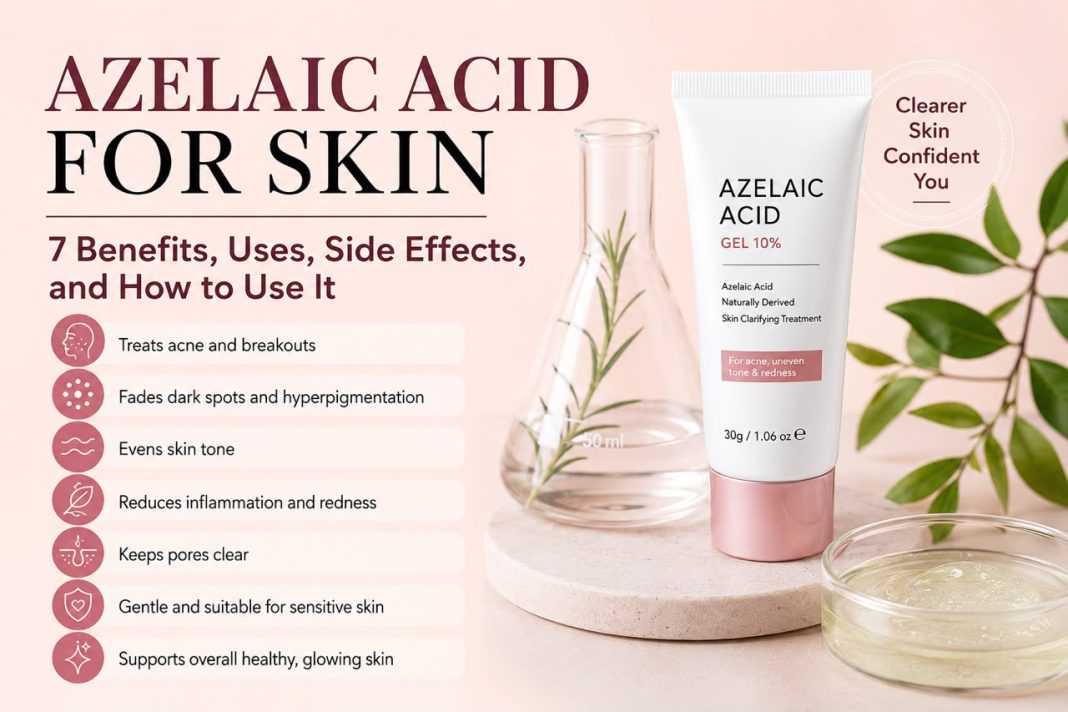
Azelaic acid for skin can help improve acne, clogged pores, inflammation, dark spots, and uneven skin tone. This versatile skincare ingredient is available in creams, gels, foams, and other topical formulations, with different strengths depending on the product. When used correctly, azelaic acid can be a useful addition to many skincare routines.
It is especially helpful for people dealing with acne and the dark marks that can remain after breakouts because it can target both concerns.Azelaic acid is a skincare ingredient that can help with acne, clogged pores, inflammation, dark spots, and uneven skin tone. It is available in different creams, gels, foams, and other topical formulations, with strengths varying by product.
Unlike some stronger active ingredients, azelaic acid is generally well tolerated when used correctly. Dermatology guidance also recognizes topical azelaic acid as an effective acne treatment.
For people who struggle with acne and the dark marks left behind after breakouts, azelaic acid can be particularly useful because it can address both concerns.
What is Azelaic Acid for skin?
Azelaic acid for skin is a topical skincare treatment used to address acne, inflammation, clogged pores, and uneven pigmentation.
Azelaic acid is a naturally occurring dicarboxylic acid found in grains such as wheat, rye, and barley. In skincare, it is used as a topical active ingredient for conditions including acne and certain types of pigmentation.
It has antimicrobial, anti-inflammatory, and keratinization-regulating properties. It can help keep pores clear and reduce acne-causing inflammation. It also affects melanin production, which is why dermatologists use it to help manage post-inflammatory hyperpigmentation.
7 Benefits of Azelaic Acid for Skin
The benefits of azelaic acid for skin include helping with acne, dark spots, redness, uneven skin tone, and clogged pores.
- It Helps Treat Acne
Azelaic acid can help treat mild to moderate acne, including inflammatory pimples and clogged pores.
The American Academy of Dermatology lists topical azelaic acid among recommended acne treatments. It works partly by helping keep pores open, reducing acne-causing bacteria, and decreasing inflammation.
- It Helps Fade Dark Spots After Acne
One of the biggest advantages of azelaic acid is its ability to help address post-inflammatory hyperpigmentation.
When acne heals, it can leave brown or dark marks that remain for weeks or months. This can be particularly noticeable in darker skin tones.
Azelaic acid can help reduce the appearance of these marks while also treating the acne that causes them.
- It Can Improve Uneven Skin Tone
Uneven pigmentation can make the complexion appear dull or patchy. Because azelaic acid can interfere with tyrosinase, an enzyme involved in melanin production, it may help reduce excess pigmentation over time.
Consistent use is more important than applying a large amount. Results usually take time.
- It Can Help Reduce Inflammation
Inflammation contributes to redness and irritated acne lesions. Azelaic acid has anti-inflammatory properties that can help calm acne-related inflammation.
This makes it useful for people who experience both breakouts and redness.
- It Helps Keep Pores Clear
Azelaic acid has a mild comedolytic effect. This means it can help prevent the buildup of dead skin cells that contributes to clogged pores.
It may therefore be useful for people dealing with blackheads, whiteheads, and recurring breakouts.
- It May Help With Rosacea-Related Skin Concerns
Certain azelaic acid formulations are used to manage papulopustular rosacea. However, rosacea requires proper diagnosis because facial redness can have several causes.
If you have persistent facial redness, burning, or recurring bumps, speak with a dermatologist before assuming that you have rosacea.
- It Can Be Useful for Acne-Prone Darker Skin
Acne and post-inflammatory hyperpigmentation often occur together in people with darker skin tones. Treating the acne while addressing the resulting dark marks can help reduce the overall impact of breakouts.
The American Academy of Dermatology specifically highlights the importance of treating both acne and the dark spots that can follow it in people with skin of color.
How to Use Azelaic Acid in Your Skincare Routine
If you are new to azelaic acid, start slowly.
A simple routine can look like this:
Morning
- Gentle cleanser.
- Azelaic acid, if your skin tolerates morning application.
- Moisturizer.
- Broad-spectrum sunscreen.
Night
- Gentle cleanser.
- Azelaic acid.
- Moisturizer.
Follow the instructions on your specific product because concentrations and formulations differ.
If your skin is sensitive, start with a few applications per week before increasing frequency. Avoid applying excessive amounts because more product does not necessarily produce faster results.
Dermatologists also recommend giving acne treatments enough time to work instead of changing products frequently.
Can Azelaic Acid Be Used Every Day?
Many people can use azelaic acid regularly, including once or twice daily depending on the formulation and their skin’s tolerance.
However, sensitive skin may need a slower introduction.
If you experience persistent burning, severe redness, swelling, itching, or significant peeling, stop using the product and seek professional medical advice. Azelaic acid is generally well tolerated, but irritation can occur, particularly in people with very sensitive or eczema-prone skin.
Can You Use Azelaic Acid With Other Skincare Ingredients?
Azelaic acid can be incorporated into a routine containing other active ingredients, but combining several potentially irritating products at once can make your skin more sensitive.
If you already use ingredients such as retinoids, benzoyl peroxide, salicylic acid, or strong exfoliating acids, introduce azelaic acid carefully.
A simple routine is often easier to tolerate than using several powerful actives simultaneously.
For acne, dermatologists may recommend combinations of treatments depending on the severity and type of acne.
Does Azelaic Acid Help With Acne Scars?
It is important to distinguish between dark acne marks and true acne scars.
Azelaic acid can help fade post-inflammatory hyperpigmentation, which is a dark mark left after inflammation.
It does not remove depressed or raised acne scars in the same way that professional procedures can.
If you have deep acne scars, a dermatologist can recommend treatments based on the type and severity of the scarring.
How Long Does Azelaic Acid Take to Work?
Results vary from person to person.
DermNet notes that people treating acne may begin to see improvement after about four weeks, while rosacea treatment can take longer.
Dark marks can take longer to fade, especially when new acne continues to develop.
Consistency matters. Avoid switching between several products every few days because that can irritate the skin and make it difficult to determine what is actually working.
Are There Side Effects of Azelaic Acid?
Azelaic acid is generally well tolerated, but some people experience:
- Mild burning or stinging
- Itching
- Dryness
- Redness
- Scaling
- Skin irritation
These effects can be more noticeable when you first introduce the ingredient.
If you develop severe or persistent irritation, stop using the product and speak with a healthcare professional.
Is Azelaic Acid Safe During Pregnancy?
Topical azelaic acid is generally considered one of the acne treatment options that can be used during pregnancy, based on available evidence and clinical guidance. However, pregnancy-specific evidence remains limited, and individual circumstances matter.
If you are pregnant, trying to become pregnant, or breastfeeding, discuss your skincare products with your doctor or dermatologist before starting a new treatment.
Who Should Consider Azelaic Acid?
Azelaic acid may be worth considering if you are dealing with:
- Mild to moderate acne
- Post-acne dark marks
- Uneven skin tone
- Clogged pores
- Acne-related inflammation
- Certain types of rosacea
It may be especially useful when acne and pigmentation occur together.
How to Get the Best Results From Azelaic Acid for Skin
To get the best results from azelaic acid for skin, use it consistently and introduce it gradually if you have sensitive skin. Apply the recommended amount, follow with a moisturizer, and use sunscreen during the day. Avoid adding several strong active ingredients at the same time if your skin becomes irritated.
The American Academy of Dermatology lists topical azelaic acid among recommended acne treatments.
If your skin becomes irritated while introducing azelaic acid, focus on gentle skincare and learn how to repair a damaged skin barrier naturally.
Final Thoughts
Azelaic acid is a versatile skincare ingredient that can address several common skin concerns. It can help manage acne, reduce inflammation, keep pores clearer, and improve the appearance of dark marks left after breakouts.
Start gradually, follow the instructions for your product, moisturize regularly, and protect your skin from the sun. If your acne is severe, painful, persistent, or causing significant scarring or pigmentation, professional dermatological care can help you find a more effective treatment plan.