

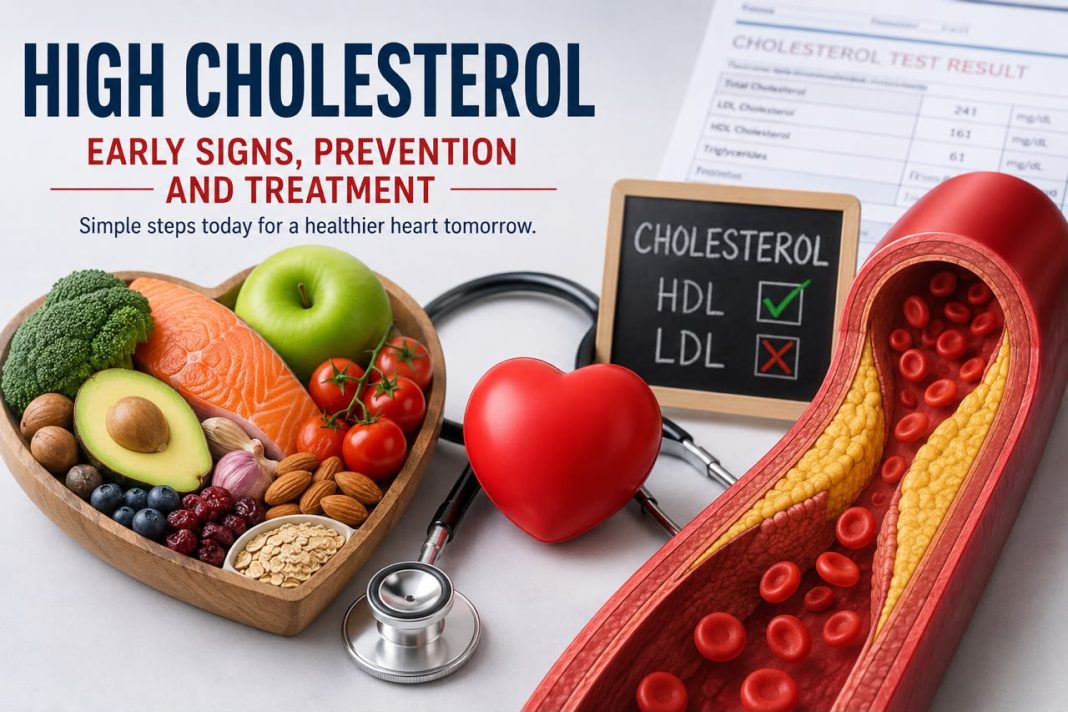
High Cholesterol: Early Warning Signs, Causes, Prevention, and Treatment
Early signs of high cholesterol can be difficult to recognize because high cholesterol usually does not cause noticeable symptoms. Many people have high cholesterol without knowing it until they have a blood test.
High cholesterol can increase your risk of heart disease, heart attack, and stroke. Understanding your cholesterol levels, risk factors, prevention strategies, and treatment options can help you protect your heart and overall health.High cholesterol is a common health problem that can increase your risk of heart disease, heart attack, and stroke. The challenging part is that high cholesterol usually does not cause noticeable symptoms in its early stages. Many people only discover they have high cholesterol after a routine blood test.
Understanding your cholesterol levels, knowing your risk factors, and making healthy lifestyle changes can help protect your heart and blood vessels. According to the National Heart, Lung, and Blood Institute (NHLBI), cholesterol is a waxy substance that your body needs, but excessive levels can contribute to cardiovascular disease.
Early Signs of High Cholesterol
Early signs of high cholesterol are often absent, which is why regular cholesterol testing is important.
High cholesterol usually has no early warning signs. You can have high LDL cholesterol and feel completely healthy. The most reliable way to know your cholesterol level is through a blood test.
What Is Cholesterol?
Cholesterol is a waxy, fat-like substance that your body needs to function properly. Your body uses cholesterol to make hormones, vitamin D, and substances that help with digestion.
However, having too much cholesterol in your blood can cause problems. Excess low-density lipoprotein, commonly called LDL or “bad cholesterol,” can contribute to plaque buildup inside the arteries. Over time, this can narrow or block blood vessels and increase the risk of cardiovascular disease. (NHLBI, NIH)
High-density lipoprotein, or HDL, is often called “good cholesterol” because it helps carry cholesterol away from the arteries toward the liver.
What Causes High Cholesterol?
Several factors can contribute to unhealthy cholesterol levels.
Common causes and risk factors include:
- Eating too many foods high in saturated fats.
- Lack of regular physical activity.
- Being overweight or obese.
- Smoking.
- Certain medical conditions, including diabetes and kidney disease.
- Some medications.
- Family history of high cholesterol.
- Genetic conditions such as familial hypercholesterolemia.
- Age-related changes in cholesterol levels.
Your lifestyle plays an important role, but genetics and other health conditions can also affect your cholesterol. (NHLBI, NIH)
What Are the Early Signs of High Cholesterol?
This is one of the most important things to understand about high cholesterol.
High cholesterol usually has no early warning signs.
You can have high LDL cholesterol and feel completely healthy. Headaches, tiredness, dizziness, or body pains should not automatically be blamed on high cholesterol.
The most reliable way to know your cholesterol level is through a blood test, usually called a lipid panel. Your healthcare provider can assess your cholesterol results alongside your age, family history, blood pressure, lifestyle, and other risk factors. (NHLBI, NIH)
Possible physical signs of extremely high cholesterol
In people with very high cholesterol, particularly those with inherited familial hypercholesterolemia, certain visible signs can sometimes appear.
These may include:
- Yellowish fatty deposits or bumps around the skin and joints.
- Fatty deposits around the eyelids.
- A grayish-white ring around the cornea of the eye.
These signs are more commonly associated with very high cholesterol and do not occur in everyone with high cholesterol. (NHLBI, NIH)
Why Is High Cholesterol Dangerous?
High LDL cholesterol can contribute to the buildup of plaque inside the arteries. This process is called atherosclerosis.
As plaque accumulates, arteries can become narrower, reducing blood flow. If a blood clot blocks an artery supplying the heart or brain, it can result in a heart attack or stroke. (NHLBI, NIH)
This is why you should not wait for symptoms before paying attention to your cholesterol.
How Can You Prevent High Cholesterol?
Knowing the early signs of high cholesterol can encourage you to take action, but prevention should focus on maintaining healthy cholesterol levels before problems develop.
You can reduce your risk by adopting heart-healthy habits.
- Eat More Heart-Healthy Foods
Build your meals around vegetables, fruits, whole grains, beans, nuts, seeds, and other nutrient-rich foods.
Choose healthier sources of fat and reduce foods that contain large amounts of saturated fat.
Foods high in saturated fat can raise LDL cholesterol. These include fatty cuts of meat, some full-fat dairy products, and other foods containing significant amounts of saturated fat. (NHLBI, NIH)
- Eat More Soluble Fiber
Foods containing soluble fiber can form part of a cholesterol-lowering diet.
Good sources include:
- Oats.
- Beans.
- Lentils.
- Fruits.
- Vegetables.
- Some whole grains.
Increasing fiber as part of an overall heart-healthy diet can help support healthier LDL cholesterol levels. (NHLBI, NIH)
- Exercise Regularly
Physical activity can help improve cholesterol levels and reduce other cardiovascular risk factors.
Aim for regular moderate-intensity physical activity. For many adults, a useful target is at least 150 minutes of moderate activity per week, such as brisk walking, if medically appropriate. (NHLBI, NIH)
- Maintain a Healthy Weight
If you are overweight, gradual weight loss can improve several heart disease risk factors, including cholesterol and blood pressure.
Focus on sustainable eating habits and regular physical activity rather than extreme diets.
- Avoid Smoking
Smoking can negatively affect cholesterol and cardiovascular health. Quitting smoking can reduce your overall risk of heart and blood vessel disease.
- Check Your Cholesterol
Because high cholesterol often has no symptoms, regular screening is important.
Ask a healthcare professional whether you should have a lipid panel based on your age, health history, family history, and cardiovascular risk.
What Can You Do If You Already Have High Cholesterol?
Having high cholesterol does not mean you should panic. It means you need to understand your numbers and take appropriate steps to manage them.
Treatment often starts with lifestyle changes, including a heart-healthy diet, regular physical activity, weight management, and addressing other cardiovascular risk factors. (NHLBI, NIH)
For some people, lifestyle changes may not be enough. A healthcare professional may recommend cholesterol-lowering medication based on LDL levels and your overall risk of heart disease or stroke.
Statins are among the most commonly prescribed medications for high cholesterol. Other medications may also be appropriate for certain people. (NHLBI, NIH)
Is There a Natural Remedy for High Cholesterol?
There is no single food, drink, herb, or homemade mixture that can safely replace proper cholesterol management.
Some dietary changes can help improve cholesterol levels, but people with significantly elevated cholesterol may need medication in addition to lifestyle changes.
If you have been prescribed cholesterol medication, do not stop taking it or replace it with supplements without discussing it with your healthcare professional.
The most effective approach is usually a combination of appropriate diet, physical activity, weight management, treatment of other health conditions, and medication when medically indicated. (NHLBI, NIH) Treatment options depend on your cholesterol levels and overall cardiovascular risk. The NHLBI’s cholesterol treatment guide provides further information about lifestyle changes and cholesterol-lowering medicines.
When Should You See a Doctor? If you are concerned about the early signs of high cholesterol, speak with a healthcare professional and ask whether a lipid panel is appropriate. Maintaining a healthy weight can support better cholesterol levels and overall heart health. If you are trying to manage your weight, focus on gradual, sustainable changes to your diet and physical activity rather than extreme diets. Read our guide on healthy weight loss tips for practical strategies that can support your overall health.
Consider speaking with a healthcare professional if:
- You have been told that your cholesterol is high.
- You have a strong family history of high cholesterol or early heart disease.
- You have diabetes, high blood pressure, or another cardiovascular risk factor.
- You have been prescribed cholesterol medication.
- You notice unusual fatty deposits around your eyes, skin, or joints.
- You are concerned about your cardiovascular risk. Understanding the early signs of high cholesterol and checking your cholesterol regularly can help you identify potential problems early.
A healthcare professional can order a lipid panel and help determine what your cholesterol numbers mean for your overall health.
Final Thoughts
High cholesterol can develop without obvious symptoms, which makes regular health checks important. You should not wait until you feel unwell before checking your cholesterol.
A heart-healthy diet, regular physical activity, healthy weight management, avoiding smoking, and appropriate medical treatment can help manage cholesterol and reduce the risk of serious cardiovascular complications.
If you are concerned about your cholesterol, speak with a qualified healthcare professional and ask whether a cholesterol test is appropriate for you.