

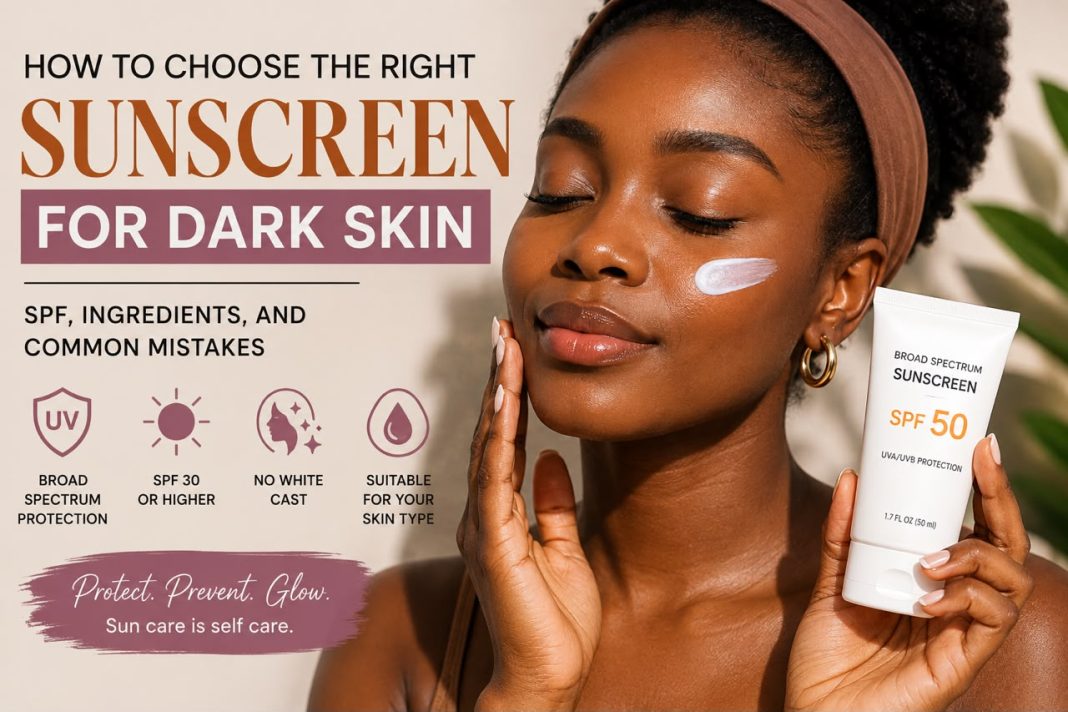
Sunscreen for dark skin is an important part of a daily skincare routine, even when your skin tone does not burn easily in the sun. Melanin provides some natural protection against UV radiation, but it does not block all UV damage. Regular sunscreen use can help protect your skin from sunburn, premature aging, uneven pigmentation, and worsening dark spots.
How to Choose the Best Sunscreen for Dark Skin
Choosing the right sunscreen can be confusing, especially if you have experienced products that leave a white or gray cast on your skin. The good news is that there are now many sunscreen formulas designed to blend better with deeper skin tones.
Why Sunscreen Matters for Dark Skin
Using sunscreen for dark skin consistently can help protect against UV-related pigmentation and premature skin aging.
Dark skin contains more melanin, which helps provide some natural protection against ultraviolet radiation. However, this protection is not enough to replace sunscreen.
UV exposure can contribute to premature skin aging and pigmentation changes. Sun exposure can also make existing dark spots appear more noticeable and can make it harder for post-inflammatory hyperpigmentation to fade.
Daily sunscreen is therefore useful if you are trying to maintain a more even-looking complexion.
What SPF Should You Use?
When choosing sunscreen for dark skin, look for broad-spectrum protection with SPF 30 or higher.
For everyday use, choose a broad-spectrum sunscreen with SPF 30 or higher.
SPF measures protection against UVB radiation, which is strongly associated with sunburn. Broad-spectrum protection also covers UVA radiation, which contributes to premature skin aging and pigmentation.
If you spend extended periods outdoors, sweat heavily, swim, or live in an area with strong sun exposure, you may prefer a higher SPF and should reapply as needed.
Along with daily sun protection, learning how to repair damaged skin barrier can help maintain healthier, more resilient skin
The important thing is to use enough sunscreen and apply it consistently.
How to Choose Sunscreen for Dark Skin
The right sunscreen for dark skin should provide reliable protection while feeling comfortable on your skin.
The best sunscreen for dark skin is one that provides adequate protection and works comfortably with your complexion and skin type.
Look for these features when choosing a product.
- Choose Broad-Spectrum Protection
Look for the words broad spectrum on the sunscreen label. This indicates protection against both UVA and UVB radiation.
This is especially useful if you are concerned about uneven skin tone, dark spots, and visible signs of premature aging.
- Look for SPF 30 or Higher
SPF 30 is a practical minimum for daily sunscreen use.
You do not necessarily need an extremely high SPF for ordinary daily activities, but you need to apply your sunscreen correctly and reapply when appropriate.
- Consider Tinted Sunscreen
Tinted sunscreen can be particularly useful for people with dark skin.
Some tinted formulas contain iron oxides, which can provide protection against visible light. Visible light can contribute to pigmentation, particularly in people who are prone to hyperpigmentation.
A well-matched tint can also eliminate the gray or white appearance that some sunscreens leave on deeper skin tones.
- Avoid Products That Leave a Strong White Cast
A sunscreen can offer excellent UV protection and still be uncomfortable to wear if it leaves a noticeable white or gray layer on your skin.
This is one reason some people stop using sunscreen regularly.
Look for formulas described as:
- Invisible
- Sheer
- Transparent
- Clear
- Tinted
- No white cast
Always test a small amount before purchasing a large bottle when possible.
Choose a Formula That Matches Your Skin Type
Your skin type should also influence your sunscreen choice.
For Oily Skin
Choose lightweight, non-greasy formulas. Gel, fluid, or oil-free sunscreens may feel more comfortable if your skin becomes shiny during the day.
If you are prone to clogged pores, look for products labelled non-comedogenic.
For Dry Skin
Cream-based sunscreens can provide more comfort if your skin feels tight or dry.
You can also look for moisturizing ingredients such as glycerin, hyaluronic acid, or ceramides.
For Sensitive Skin
If your skin reacts easily to skincare products, consider a fragrance-free formula with ingredients that your skin tolerates well.
Mineral sunscreens containing zinc oxide can be an option for some people with sensitive skin, although they may be more likely to leave a visible cast depending on the formulation.
Common Sunscreen Mistakes to Avoid
Choosing the right sunscreen for dark skin can make daily sun protection easier and more comfortable.
The best sunscreen for dark skin should provide broad-spectrum protection without leaving an unwanted white or gray cast.
If you have oily or acne-prone skin, look for a sunscreen for dark skin with a lightweight, non-comedogenic formula.
Even when you use a good sunscreen, certain habits can reduce its effectiveness.
Applying Too Little
Using a very thin layer may leave your skin with less protection than the SPF rating suggests.
Apply a generous, even layer to exposed areas of skin.
Forgetting Your Neck and Ears
Your face is not the only area exposed to sunlight.
Remember your:
- Neck
- Ears
- Hairline
- Hands
- Chest
- Other exposed areas
Applying Sunscreen Only on Sunny Days
UV exposure does not disappear because the sky is cloudy.
If you spend time outdoors during daylight hours, sunscreen can remain an important part of your skincare routine.
Not Reapplying
Sunscreen can wear away through sweating, swimming, rubbing, and normal daily activity.
Reapply according to the product instructions, particularly when you spend extended periods outdoors.
Choosing a Product You Hate Wearing
Consistency matters.
If a sunscreen feels heavy, greasy, irritating, or leaves an obvious cast, you may stop using it. A comfortable sunscreen that you can apply consistently is often a better practical choice.
Can Sunscreen Help With Dark Spots?
If you are prone to hyperpigmentation, sunscreen for dark skin can be an important part of your daily routine.
Sunscreen can help prevent sun exposure from worsening existing pigmentation.
However, sunscreen does not instantly remove dark spots. If you are dealing with acne marks or hyperpigmentation, sunscreen works best as part of a broader skincare routine.
Ingredients such as niacinamide, vitamin C, azelaic acid, or other targeted ingredients may also be used depending on your skin’s needs and tolerance.
If your pigmentation is persistent, spreading, or difficult to manage, consider speaking with a dermatologist for personalized advice.
How to Apply Sunscreen Correctly
Apply sunscreen as the final step of your morning skincare routine, before makeup.
Use enough product to adequately cover exposed skin. Apply it evenly rather than concentrating the product in only a few areas.
Give the sunscreen a little time to settle before applying makeup if the product instructions recommend it.
Remember to protect your skin in other ways too. Wearing a hat, seeking shade, and using protective clothing can reduce direct sun exposure.
The American Academy of Dermatology recommends choosing a broad-spectrum, water-resistant sunscreen with SPF 30 or higher. Its guide also explains why tinted sunscreen can be useful for people with darker skin tones. American Academy of Dermatology: How to Select a Sunscreen
Final Thoughts
Choosing the right sunscreen for dark skin comes down to more than simply picking the highest SPF available. Look for broad-spectrum protection, SPF 30 or higher, a formula that suits your skin type, and a finish that blends comfortably with your complexion.
If you struggle with white or gray casts, try a clear, sheer, or tinted formula. Most importantly, choose a sunscreen you will actually use consistently.
Daily sun protection can support your long-term skincare goals and help protect your complexion from UV-related damage and worsening pigmentation.