

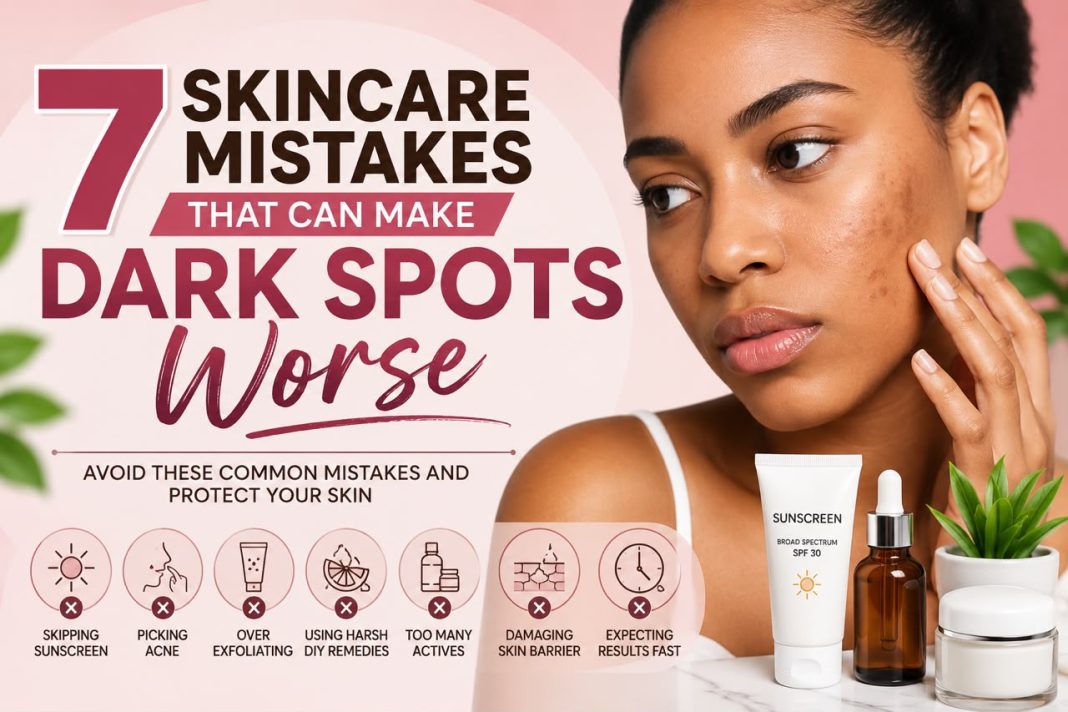
Dark spots can develop after acne, skin irritation, inflammation, hormonal changes, or sun exposure. Understanding common skincare mistakes can help you avoid unnecessary irritation and protect your skin while treating hyperpigmentation.
Hyperpigmentation happens when the skin produces excess melanin. Although dark spots can fade gradually, repeated irritation or sun exposure can make them darker and more difficult to treat.
Your skincare routine should focus on protecting the skin barrier, reducing inflammation, and preventing additional pigmentation.
Understanding the skincare mistakes that can make dark spots worse can help you avoid irritation and protect your skin while treating hyperpigmentation.
Common Skincare Mistakes That Can Make Dark Spots Worse
What Causes Dark Spots?
Dark spots, also called hyperpigmentation, can develop when the skin responds to inflammation or injury by producing more melanin.
Common triggers include:
- Acne and breakouts
- Picking or squeezing pimples
- Sun exposure
- Hormonal changes
- Cuts, burns, or insect bites
- Irritating skincare products
- Certain medications
- Skin conditions that cause inflammation
The cause of your pigmentation matters because treatment depends on the type and trigger.
7 Skincare Mistakes That Can Make Dark Spots Worse
- Skipping Sunscreen
One of the biggest skincare mistakes that can make dark spots worse is failing to protect your skin from the sun.
UV exposure can stimulate melanin production and make existing pigmentation darker. Sun exposure can also contribute to uneven skin tone and premature skin aging.
Use a broad-spectrum sunscreen with SPF 30 or higher every day. Reapply as recommended, especially when spending extended periods outdoors.
Sunscreen remains important even if you already have dark skin.
- Picking or Squeezing Pimples
Picking at acne can damage the skin and increase inflammation. That inflammation can leave behind post-inflammatory hyperpigmentation.
Instead of squeezing a pimple, use appropriate acne care and allow the area to heal.
If you frequently develop painful or persistent acne, consider speaking with a dermatologist. Treating the acne itself can help reduce the formation of new dark marks.
- Over-Exfoliating Your Skin
Exfoliation can help remove dead skin cells, but doing it too frequently can irritate your skin.
Using strong exfoliating acids, facial scrubs, or multiple exfoliating products at the same time may cause redness, dryness, burning, or peeling.
Skin irritation can trigger more inflammation and potentially worsen pigmentation.
Choose a gentle approach and avoid exfoliating skin that is already irritated.
- Using Lemon Juice or Harsh DIY Treatments
Lemon juice is sometimes promoted as a natural remedy for dark spots. However, applying lemon juice directly to your skin can cause irritation and increase sensitivity to sunlight.
Other harsh DIY treatments can also damage the skin barrier.
Natural does not automatically mean safe for your skin. Before applying a home remedy to your face, consider whether it has evidence supporting its safety and effectiveness.
- Using Too Many Active Ingredients at Once
Another common mistake is combining several powerful skincare ingredients because you want faster results.
For example, using exfoliating acids, retinoids, benzoyl peroxide, and strong brightening products together may irritate your skin if introduced too quickly.
Irritation can make pigmentation more noticeable.
Introduce active ingredients gradually. Give your skin time to adjust before adding another active product.
Dark spots are a common form of hyperpigmentation, and understanding what causes them can help you choose the right skincare approach. For a deeper look at the causes, treatment options, and prevention strategies, read our guide to hyperpigmentation.
For additional expert guidance on caring for your skin and preventing common skin concerns, visit the American Academy of Dermatology for evidence-based skincare information.
- Ignoring Your Skin Barrier
A damaged skin barrier can leave your skin dry, sensitive, irritated, and more reactive to skincare products.
When trying to fade dark spots, do not focus exclusively on brightening ingredients. Your routine should also support healthy skin barrier function.
Use a gentle cleanser and moisturizer. Ingredients such as ceramides, glycerin, panthenol, and hyaluronic acid can help support hydration and barrier care.
If your skin is burning, excessively peeling, or becoming increasingly irritated, simplify your routine.
- Expecting Dark Spots to Disappear Overnight
Trying too many treatments because you want immediate results can become one of the most damaging skincare mistakes that can make dark spots worse.
Hyperpigmentation often takes time to improve. Constantly changing products can irritate your skin and make it harder to determine which products actually work for you.
Choose a simple routine and remain consistent.
How to Prevent Dark Spots From Getting Worse
Once you understand the skincare mistakes that can make dark spots worse, prevention becomes easier.
Follow these habits:
- Wear broad-spectrum SPF 30 or higher every day.
- Avoid picking or squeezing acne.
- Cleanse your skin gently.
- Moisturize regularly.
- Introduce active ingredients gradually.
- Avoid excessive exfoliation.
- Stop using products that cause persistent burning or irritation.
- Treat acne and other inflammatory skin conditions.
- Give skincare products enough time to work before changing your routine.
Ingredients That Can Help Improve Dark Spots
Several skincare ingredients may help improve uneven pigmentation when used correctly.
Vitamin C
Vitamin C is an antioxidant that can help brighten the appearance of skin and support a more even skin tone.
Niacinamide
Niacinamide can help support the skin barrier and improve the appearance of uneven skin tone.
Azelaic Acid
Azelaic acid can help with acne and pigmentation. It may be particularly useful when dark marks develop after inflammatory acne.
Retinoids
Retinoids can increase skin cell turnover and may help improve acne and hyperpigmentation. They can also cause irritation if used incorrectly, so introduce them gradually.
Sunscreen
Sunscreen does not fade existing pigmentation by itself, but it helps prevent UV exposure from making dark spots darker and helps protect your progress.
How Long Do Dark Spots Take to Fade?
The time required depends on the cause, depth, location, and your skincare routine.
Some superficial dark marks may gradually improve over several weeks or months. Deeper or persistent pigmentation can take longer.
Consistency matters. Using several aggressive treatments at once does not necessarily produce faster results and may increase irritation.
When Should You See a Dermatologist?
Consider seeing a dermatologist if your dark spots:
- Continue getting darker despite sun protection
- Keep spreading
- Change in size, shape, or appearance
- Become painful or itchy
- Do not improve after consistent skincare
- Develop alongside persistent or severe acne
A dermatologist can determine the cause of the pigmentation and recommend appropriate treatment.
Frequently Asked Questions
Can skincare products cause dark spots?
Yes. Products that cause significant irritation or inflammation can contribute to post-inflammatory hyperpigmentation, particularly in people prone to pigmentation.
Does sunscreen help prevent dark spots?
Yes. Regular use of broad-spectrum sunscreen can help protect against UV exposure that can worsen existing pigmentation and contribute to new pigmentation.
Is exfoliation good for dark spots?
Gentle exfoliation may help improve skin texture and support the removal of dead skin cells. However, over-exfoliation can irritate the skin and potentially worsen pigmentation.
Can I use vitamin C and retinol together?
They can be used in the same overall skincare routine, but combining multiple active ingredients may irritate some people. If your skin is sensitive, consider using them at different times or on alternating days.
Why do my dark spots keep coming back?
Dark spots can return when the underlying trigger remains. Continued acne, inflammation, hormonal changes, and sun exposure can contribute to recurring pigmentation.
Final Thoughts
Understanding the skincare mistakes that can make dark spots worse can help you avoid unnecessary irritation and protect your skin from further pigmentation. Skipping sunscreen, picking acne, over-exfoliating, using harsh DIY treatments, combining too many active ingredients, and neglecting your skin barrier can all interfere with your progress.
A simple and consistent routine is usually a better approach than constantly trying aggressive treatments. Protect your skin from the sun, manage acne and inflammation, moisturize regularly, and introduce brightening ingredients gradually.
If your pigmentation is persistent, worsening, or difficult to identify, consult a qualified dermatologist for an appropriate evaluation and treatment plan.