

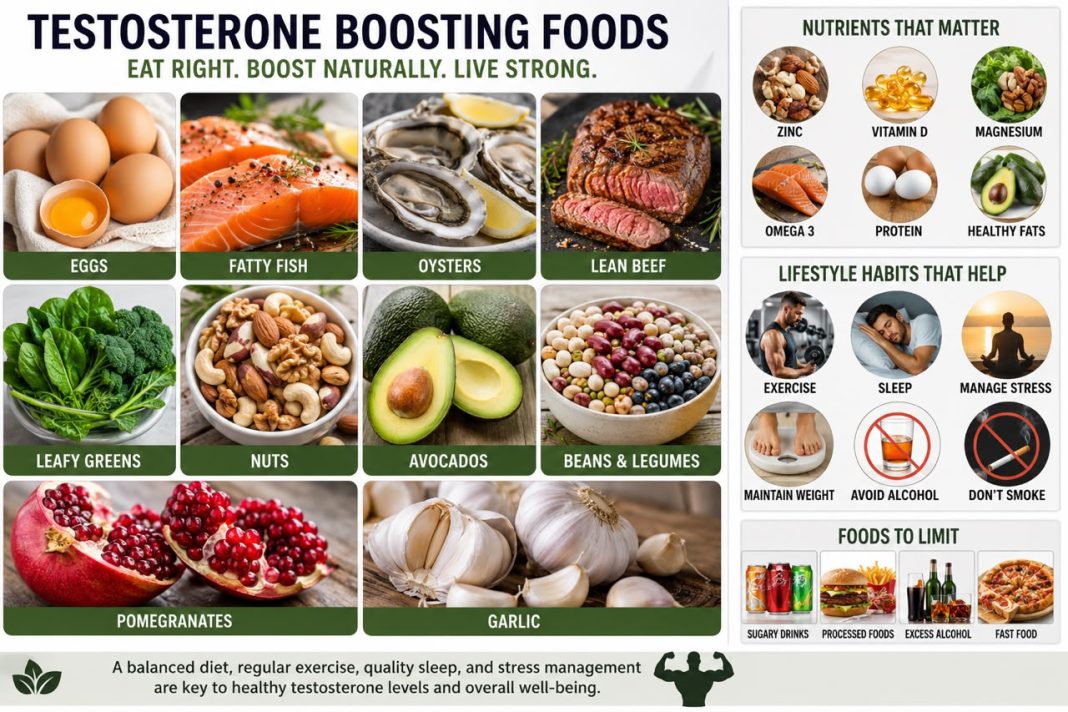
Testosterone boosting foods can help support healthy hormone production and improve overall health. Testosterone boosting foods can help support healthy hormone production when combined with a balanced diet and healthy lifestyle. Testosterone is an important hormone that plays a key role in muscle growth, energy levels, bone strength, libido, and overall well being. While no food can increase testosterone overnight, eating the right foods can help your body maintain healthy testosterone levels naturally. Testosterone Boosting food is an important hormone for both men and women, although men produce it in much higher amounts. It supports muscle growth, bone strength, energy, mood, sex drive, and fertility. As people age, testosterone levels naturally decline. Poor diet, lack of sleep, stress, obesity, and certain medical conditions can also contribute to lower levels.
While no single food can dramatically increase testosterone overnight, eating a balanced diet rich in specific nutrients can help your body produce and maintain healthy testosterone levels naturally.
Best Testosterone Boosting Foods
The best testosterone boosting foods provide essential nutrients such as zinc, vitamin D, magnesium, and healthy fats.
Foods That Support Healthy Testosterone Levels
Adding testosterone boosting foods to your daily diet may help maintain healthy testosterone levels over time.
- Eggs
Eggs are an excellent source of protein, healthy fats, and vitamin D. Vitamin D plays a role in testosterone production, while protein supports muscle maintenance and hormone balance.
- Fatty Fish
Fish such as salmon, sardines, tuna, and mackerel are rich in omega 3 fatty acids and vitamin D. These nutrients help reduce inflammation and support overall hormone health.
- Oysters and Shellfish
Oysters contain high amounts of zinc, one of the most important minerals for testosterone production. Zinc deficiency has been linked to lower testosterone levels.
- Lean Beef
Lean cuts of beef provide zinc, iron, and high quality protein. These nutrients support muscle growth and healthy hormone production. Choose lean portions and eat them in moderation.
- Leafy Green Vegetables
Spinach, kale, and Swiss chard contain magnesium, a mineral that may help support healthy testosterone levels, especially in people with low magnesium intake.
- Nuts
Almonds, Brazil nuts, walnuts, and cashews provide healthy fats, magnesium, selenium, and antioxidants that contribute to overall reproductive and hormonal health.
- Avocados
Avocados are rich in healthy monounsaturated fats, vitamin E, and magnesium. Healthy fats are essential because hormones, including testosterone, are made from cholesterol.
- Beans and Legumes
Beans, lentils, and chickpeas provide protein, zinc, magnesium, and fiber. They help maintain stable blood sugar levels and support overall health.
- Pomegranates
Pomegranates are packed with antioxidants that may improve blood circulation and support heart health. Some studies suggest they may have a positive effect on hormone balance.
- Garlic
Garlic contains allicin, a compound that may help reduce cortisol, the body’s primary stress hormone. Lower cortisol levels may allow testosterone to function more effectively.
Nutrients That Matter
Healthy testosterone production depends on getting enough of these nutrients:
- Vitamin D
- Zinc
- Magnesium
- Omega 3 fatty acids
- Protein
- Healthy fats
- Selenium
A balanced diet that includes these nutrients is more effective than relying on supplements unless recommended by a healthcare professional. While testosterone boosting foods are important, regular exercise and quality sleep also play a major role.
Lifestyle Habits That Support Testosterone
Food works best when combined with healthy daily habits.
- Exercise regularly, especially strength training.
- Maintain a healthy body weight.
- Sleep for seven to nine hours each night.
- Manage stress through relaxation techniques.
- Limit excessive alcohol consumption.
- Avoid smoking.
Foods to Limit
Certain eating habits may negatively affect hormone balance.
- Sugary drinks and sweets
- Highly processed foods
- Excessive alcohol
- Trans fats
- Frequent fast food meals
Reducing these foods can improve overall health and may support normal testosterone levels.
When to See a Doctor
Symptoms such as low sex drive, fatigue, reduced muscle mass, depression, erectile dysfunction, or infertility may indicate low testosterone. These symptoms can also result from other medical conditions. A healthcare provider can perform blood tests and determine the appropriate treatment if needed. Eating testosterone boosting foods consistently, together with a healthy lifestyle, can support natural hormone production.
Final Thoughts
Eating testosterone boosting foods consistently, together with a healthy lifestyle, can support natural hormone production. There is no miracle food that instantly raises testosterone. However, eating a nutrient rich diet that includes eggs, fatty fish, oysters, leafy greens, nuts, avocados, beans, and fruits can support healthy hormone production. Combined with regular exercise, quality sleep, and stress management, these dietary choices can help maintain healthy testosterone levels and improve overall well being. According to the National Institutes of Health (NIH), vitamin D and zinc play important roles in overall health and hormone function.
The Mayo Clinic recommends a healthy diet, regular exercise, and adequate sleep to support overall health.Want to understand whether your hormone levels may be low? Read our guide on 10 Healthy Signs of Low Testosterone Every Man Should Know.
Frequently Asked Questions
Can food increase testosterone naturally?
Yes. A balanced diet rich in zinc, vitamin D, healthy fats, and protein can help support normal testosterone production, especially if you have nutrient deficiencies.
Which fruit is best for testosterone?
Pomegranates are among the most researched fruits for supporting hormone health because they contain powerful antioxidants. Bananas and avocados also provide nutrients that support overall wellness.
Does vitamin D affect testosterone?
Vitamin D plays a role in hormone production. People with low vitamin D levels may benefit from improving their intake through sunlight, food, or supplements under medical advice.
Are testosterone boosting supplements necessary?
Not for most healthy people. A balanced diet and healthy lifestyle are usually the first recommendations. Supplements should only be taken after consulting a healthcare professional.