
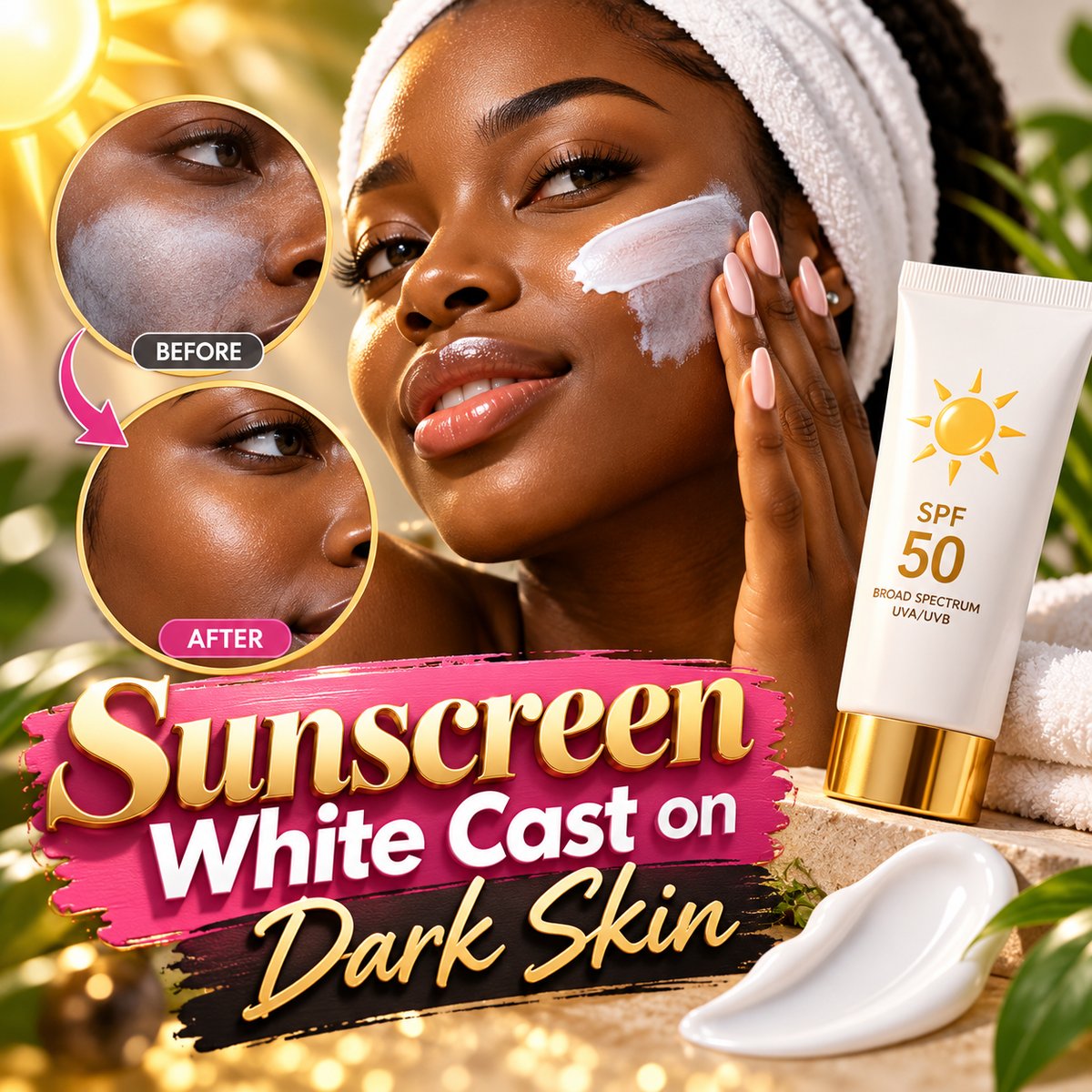
Sunscreen White Cast on Dark Skin: 5 Causes and How to Fix It
Sunscreen white cast on dark skin is a common skincare frustration. After applying sunscreen, you may notice that your face looks grey, chalky, or ashy instead of maintaining its natural complexion. This can happen when sunscreen ingredients leave a visible film on the skin or when the formula does not blend well with your skin tone.
The good news is that you can find effective sun protection without an unwanted white cast. In this guide, we explain five common causes, how to choose the right sunscreen, and how to protect dark skin from sun damage and worsening hyperpigmentation.
What Is a White Cast From Sunscreen?
A white cast is a visible white, grey, or sometimes purplish film that remains on the skin after applying sunscreen. It can make your complexion appear lighter or uneven, particularly around the forehead, cheeks, nose, and jawline.
The effect is often more noticeable on darker skin tones because the pale residue contrasts with the natural colour of the skin.
A white cast does not automatically mean that the sunscreen is ineffective. It is usually related to the formulation and the way its ingredients interact with visible light.
Why Does Sunscreen Make Dark Skin Look Grey or Ashy?
Several factors can explain why your sunscreen does not blend well with your complexion.
What Causes Sunscreen White Cast on Dark Skin?
- Mineral Sunscreen Ingredients Can Leave a White Residue
Mineral sunscreens commonly contain zinc oxide, titanium dioxide, or both. These ingredients protect the skin against UV radiation.
However, their particles can scatter visible light and leave a pale film on the skin. This effect is particularly noticeable when the formula does not blend well with your skin tone.
Mineral sunscreen is not necessarily a poor choice for dark skin. If you prefer mineral formulas, consider a tinted version or a product specifically formulated to reduce visible residue.
- The Sunscreen Formula May Not Match Your Skin Tone
Sunscreens differ in their texture, colour, particle distribution, and ability to blend into the skin.
Some products are designed to leave a more noticeable film, while others use formulations that spread more evenly. A sunscreen labelled for all skin types may still leave a cast on deeper complexions.
Your skin’s undertone also matters. A tint that looks suitable in the bottle may appear too orange, red, pale, or grey after application.
Choose a formula that blends with your complexion rather than relying only on a claim such as “universal tint.”
- You May Be Applying Too Much Product at Once
Sunscreen needs to be applied generously to provide the protection stated on its label. Applying too little can reduce protection.
However, spreading a thick amount over one small area without distributing it evenly can make the product appear patchy or chalky.
Apply sunscreen in manageable sections and spread it evenly. Do not reduce the amount you use simply to make the white cast disappear. Instead, look for a formula that works with the quantity needed for proper protection.
- Your Skincare Products May Not Layer Well Together
Your moisturiser, serum, makeup, and sunscreen may not always work well together. Some combinations can cause pilling, uneven application, or visible product buildup.
If your sunscreen forms small rolls or sits unevenly on your face, try simplifying your morning routine.
Apply your skincare products in thin layers, allow each layer to settle, and apply sunscreen as the final step of your skincare routine before makeup. If the problem continues, test a different product combination.
- Your Skin May Be Dry or Flaky
Dry patches can make sunscreen look uneven. The product may collect around areas where dead skin cells have accumulated, particularly around the nose, mouth, eyebrows, and cheeks.
If your skin feels tight or flaky, use a gentle cleanser and a moisturiser suitable for your skin type.
Avoid aggressive scrubbing or frequent exfoliation to remove the cast. These practices can irritate your skin and potentially worsen post-inflammatory hyperpigmentation.
How to Choose a Sunscreen That Does Not Make Dark Skin Look Grey
The most practical solution is to choose a sunscreen that provides reliable protection and blends well with your complexion.
- Consider a Tinted Sunscreen
Tinted sunscreen is one of the most useful options for people who experience a white cast.
These products contain pigments that help the sunscreen blend more naturally with the skin. Many tinted formulas contain iron oxides, which can also help protect against visible light.
Visible light can contribute to hyperpigmentation, especially in people with darker skin tones. For this reason, a suitable tinted sunscreen may be particularly helpful if you struggle with melasma or persistent dark spots.
Look for a formula that offers:
- SPF 30 or higher.
- Broad-spectrum protection against UVA and UVB rays.
- Water resistance when needed.
- A tint that matches your skin tone.
- Iron oxides if you want additional protection against visible light.
Tinted sunscreen is not the only effective option. The best choice is one that provides adequate protection and that you can comfortably apply every day.
- Look for Formulas Designed for Darker Skin Tones
Some sunscreens are specifically developed to blend into medium, deep, and rich skin tones.
When choosing a product, check whether the manufacturer provides shade options or demonstrates how the sunscreen looks on darker complexions.
If possible, test the product on your jawline in natural light. Check whether it leaves a grey film, creates an obvious colour difference, or blends with the surrounding skin.
- Consider Your Skin Type
Your skin type can help you narrow down your options.
For oily or acne-prone skin: Look for a lightweight, non-comedogenic formula that is less likely to clog pores.
For dry skin: Consider a moisturising formula that does not leave your skin feeling tight.
For sensitive skin: Look for a fragrance-free product formulated for sensitive skin. If sunscreen consistently causes burning or irritation, consult a dermatologist about suitable alternatives.
For combination skin: A lightweight lotion or fluid may work well, depending on which areas of your face become oily or dry.
Remember that a product’s texture and suitability vary from person to person. A formula that works well for someone else may not work as well for your skin.
- Do Not Choose Sunscreen Based on SPF Alone
SPF measures protection against sunburn-causing UVB radiation under standard testing conditions. It does not tell you everything about a sunscreen’s protection against UVA radiation or visible light.
Choose a broad-spectrum sunscreen with SPF 30 or higher. If you are concerned about hyperpigmentation, consider a tinted formula containing iron oxides as well.
Higher SPF does not automatically mean a sunscreen will blend better or leave less residue.
For more expert advice on choosing sunscreen, visit the American Academy of Dermatology’s sunscreen guide.
How to Apply Sunscreen Without Leaving an Ashy Finish
Correct application can help reduce uneven residue, although it cannot eliminate a white cast caused by the formula itself.
Follow these steps:
- Cleanse gently. Wash your face with a cleanser suited to your skin type.
- Moisturise if needed. Apply a suitable moisturiser and allow it to settle.
- Apply sunscreen evenly. Cover all exposed facial skin, including your forehead, nose, cheeks, chin, ears, and neck.
- Spread it gently. Work in sections so that the product covers the skin evenly.
- Allow it to settle. Follow the product’s instructions before applying makeup or other products.
- Reapply as directed. When outdoors, reapply approximately every two hours, and after swimming or sweating, following the product label.
Do not mix sunscreen with your moisturiser or foundation to make it blend better. Mixing products can interfere with the sunscreen’s tested performance.
If the product continues to leave a grey film despite even application, consider switching to a better-matched formula.
Best Ingredients to Look for When Choosing Sunscreen for Dark Skin
When choosing sunscreen for dark skin, consider formulas that offer broad-spectrum SPF 30 or higher. Tinted sunscreens containing iron oxides may be particularly useful if you are concerned about hyperpigmentation. If you prefer mineral sunscreen, look for a tinted formula that blends comfortably with your complexion.
Can Sunscreen Make Dark Skin Darker?
Sunscreen itself should not ordinarily make your skin darker. However, irritation or an allergic reaction to a product can cause inflammation, which may leave dark marks in some people.
Another possibility is that the sunscreen does not provide adequate protection for your needs, or that you apply too little or fail to reapply it. Continued exposure to sunlight can worsen existing pigmentation.
If your skin becomes darker after starting a new sunscreen, consider whether you have developed itching, redness, burning, or a rash. Stop using a product that causes a reaction and seek medical advice if the symptoms persist.
A dermatologist can help determine whether the change is related to irritation, melasma, post-inflammatory hyperpigmentation, or another skin condition.
How to Reduce Sunscreen White Cast on Dark Skin
To reduce sunscreen white cast on dark skin, choose a suitable formula, apply it evenly, and allow your skincare products to settle before applying sunscreen. Avoid mixing sunscreen with moisturiser or foundation, because doing so may interfere with its tested protection. If a white cast remains, try a different formulation rather than applying less sunscreen.
Does Dark Skin Really Need Sunscreen?
Yes. Melanin offers some natural protection against UV radiation, but it does not eliminate the risk of sun damage.
People with dark skin can still develop premature skin ageing, hyperpigmentation, and skin cancer.
Sun exposure can also worsen melasma and dark marks left behind by acne, insect bites, or skin irritation. Regular sunscreen use is therefore an important part of a skincare routine, regardless of complexion.
For everyday protection, choose a broad-spectrum sunscreen with SPF 30 or higher. Use a water-resistant formula when appropriate, and combine sunscreen with shade, protective clothing, and other sun-safe habits.
Frequently Asked Questions
How to Find the Right Sunscreen for Dark Skin
Finding sunscreen for dark skin can be challenging when some formulas leave a grey or chalky finish. If you experience sunscreen white cast on dark skin, consider trying a tinted formula that matches your complexion. Always choose broad-spectrum SPF 30 or higher for daily protection.
Common Mistakes That Make Sunscreen White Cast on Dark Skin Worse
Using a sunscreen that does not match your needs, rubbing the skin aggressively, and layering products that do not work well together can contribute to an uneven finish. If you experience sunscreen white cast on dark skin, simplify your routine and test a better-matched formula. Always apply enough sunscreen to achieve the protection stated on the label.
Why Sunscreen White Cast on Dark Skin Is More Noticeable
Sunscreen white cast on dark skin can be more noticeable because the pale residue contrasts with the skin’s natural pigmentation. Some sunscreen formulas contain mineral filters that leave a visible film after application. Choosing a formula designed to blend into deeper skin tones can help reduce this problem without compromising sun protection.
Why does sunscreen make my face look grey?
Some sunscreen formulas contain zinc oxide or titanium dioxide, which can scatter visible light and leave a pale residue. This effect may be more noticeable on darker skin tones. A well-matched tinted sunscreen may help.
Which sunscreen is best for dark skin?
There is no single best sunscreen for everyone. Choose a broad-spectrum formula with SPF 30 or higher that suits your skin type and blends well with your complexion. A tinted sunscreen containing iron oxides is worth considering if you have hyperpigmentation or want to reduce white cast.
Can I use mineral sunscreen on dark skin?
Yes. Mineral sunscreen can protect dark skin effectively. If you dislike the white or grey residue, try a tinted mineral formula or another suitable sunscreen that blends more naturally with your skin tone.
Does tinted sunscreen help with dark spots?
Tinted sunscreen containing iron oxides can provide protection against visible light, which may contribute to hyperpigmentation. It can help prevent existing dark spots from worsening, particularly when used consistently alongside other appropriate treatments.
Should I stop using sunscreen if it leaves a white cast?
Does Sunscreen White Cast on Dark Skin Mean the Product Is Not Working?
Sunscreen white cast on dark skin does not automatically mean the product is ineffective. The visible residue usually relates to the formula and its ingredients. However, you should still apply the recommended amount and reapply as directed to maintain adequate protection.
How to Prevent Sunscreen White Cast on Dark Skin Every Day
To prevent sunscreen white cast on dark skin, choose a formula that blends evenly with your complexion. Apply your moisturiser first if needed, allow it to settle, and then spread sunscreen evenly across your face and neck. Avoid mixing sunscreen with other products.
Sunscreen White Cast on Dark Skin and Hyperpigmentation
People concerned about hyperpigmentation may prefer a tinted sunscreen containing iron oxides. Sunscreen white cast on dark skin can make daily application frustrating, but finding a comfortable formula helps you maintain a consistent sun protection routine. Sunscreen helps prevent existing dark spots from becoming darker.
If you want to learn more about caring for irritated skin, read our guide on how to repair a damaged skin barrier naturally.
Final Advice for Sunscreen White Cast on Dark Skin
If sunscreen white cast on dark skin continues to bother you, try a different formulation rather than reducing the amount you apply. Choose a product that offers broad-spectrum protection, suits your skin type, and blends well with your complexion.
You do not need to abandon sun protection. Try a different formula, such as a tinted sunscreen or one designed to minimise white residue. If a product causes irritation, discontinue it and seek professional advice if the reaction persists.
Can sunscreen remove existing dark spots?
Sunscreen does not directly remove established pigmentation. However, protecting your skin from UV radiation and visible light can help prevent further darkening and support the results of treatments recommended for hyperpigmentation.
Final Thoughts
If sunscreen makes your dark skin look grey or ashy, the problem may be the formulation rather than your complexion. Mineral filters, an unsuitable tint, uneven application, and dry patches can all contribute to the appearance.
Start by choosing a broad-spectrum sunscreen with SPF 30 or higher. Consider a tint that matches your skin tone, especially if you are prone to dark spots. Apply it evenly and reapply as directed.
At Sassy Radiance, we believe effective skincare should support healthy skin without making you feel that you must compromise your natural complexion. With the right sunscreen, you can protect your skin and maintain a finish that feels comfortable for everyday wear.
Your skin deserves protection every day, in every shade.