

Low testosterone signs can appear gradually and often mistaken for normal aging. low testosterone is a common condition that affects men , especially after the age of 40. it can reduce energy, muscle, strength, sex drive, mood and overall health. while these changes may seem like a normal part of aging, they could be signs of low testosterone . Many men experience changes in their bodies as they get older, but some of these changes may be linked to low testosterone rather than normal aging. Testosterone is the primary male sex hormone responsible for muscle growth, energy, bone health, sex drive, mood, and the production of red blood cells.
Testosterone levels naturally decline with age, usually beginning around the age of 30. However, some men experience a greater drop that can affect their overall health and quality of life. Recognizing the healthy signs of low testosterone every man should know can help men seek medical advice early and improve their well being.
What Is Low Testosterone?
Low testosterone, also known as hypogonadism, occurs when the body does not produce enough testosterone to support normal bodily functions. While aging contributes to declining testosterone levels, obesity, diabetes, chronic illness, poor sleep, and certain medications may also play a role.
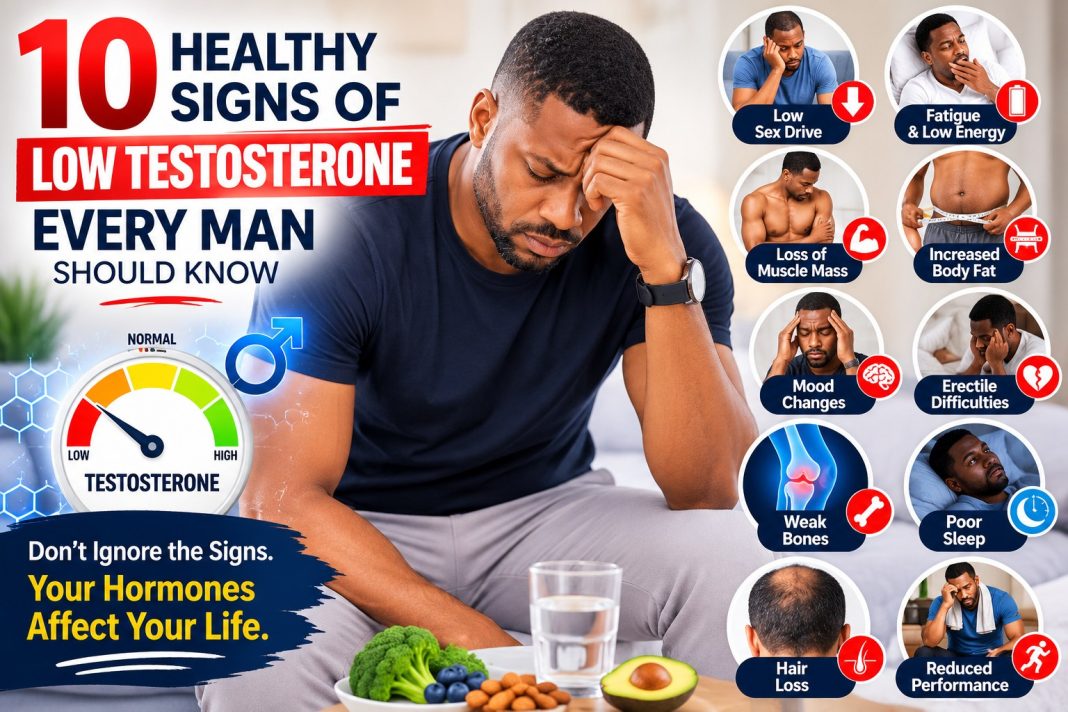
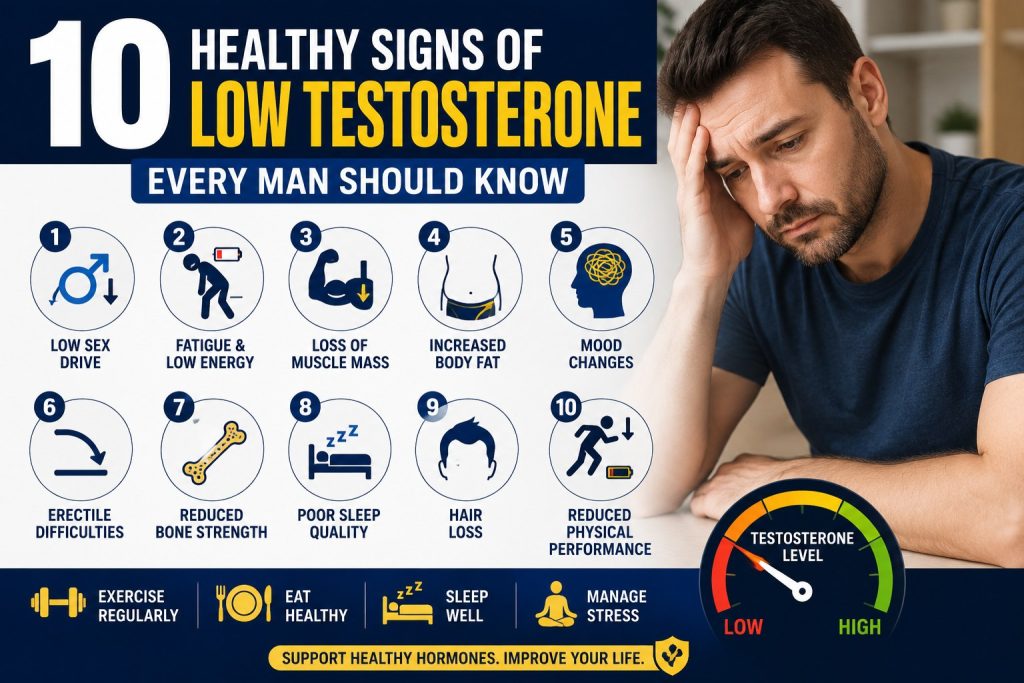
10 Healthy Signs of Low Testosterone Every Man Should Know
1. Low Sex Drive
One of the earliest signs of low testosterone is a noticeable decrease in sexual desire. While libido naturally changes with age, a sudden or persistent decline may indicate low hormone levels.
2. Fatigue and Low Energy
Men with low testosterone often feel tired even after getting enough sleep. Daily activities may become exhausting, and motivation to exercise or work may decrease.
3. Loss of Muscle Mass
Testosterone plays a major role in building and maintaining muscle. Low levels may cause muscles to become smaller and weaker, even with regular exercise.
4. Increased Body Fat
A decline in testosterone can make it easier to gain weight, particularly around the abdomen. Some men may also develop enlarged breast tissue due to hormonal imbalance.
5. Mood Changes
Low testosterone may affect emotional well being. Men may experience:
- Irritability
- Depression
- Anxiety
- Difficulty concentrating
- Reduced self confidence
6. Erectile Difficulties
Although erectile dysfunction has many causes, low testosterone can contribute by reducing sexual desire and affecting normal erectile function.
7. Reduced Bone Strength
Testosterone helps maintain strong bones. Low levels may reduce bone density, increasing the risk of fractures as men age.
8. Poor Sleep Quality
Men with low testosterone may struggle with insomnia or experience poor quality sleep. In some cases, sleep disorders such as sleep apnea may also affect testosterone production.
9. Hair Loss
Testosterone supports hair growth on the face and body. Low hormone levels may contribute to thinning hair or slower beard growth in some men.
10. Reduced Physical Performance
Many men notice they cannot exercise as long or recover as quickly as they once did. Low testosterone can reduce endurance, strength, and overall physical performance.
What Causes Low Testosterone?
Several factors can contribute to low testosterone, including:
- Aging
- Obesity
- Type 2 diabetes
- Chronic stress
- Poor sleep
- Certain medications
- Testicular injury
- Pituitary gland disorders
- Excessive alcohol consumption
How Is Low Testosterone Diagnosed?
A healthcare provider can diagnose low testosterone through:
- A physical examination
- Review of symptoms
- Blood tests to measure testosterone levels
- Additional hormone tests if necessary
Testing is usually done in the morning when testosterone levels are highest.
Can Low Testosterone Be Treated?
Treatment depends on the underlying cause. Options may include:
- Regular exercise
- Weight management
- Better sleep habits
- A balanced diet
- Stress reduction
- Treating underlying medical conditions
- Testosterone replacement therapy, when prescribed by a healthcare professional
Men should avoid taking testosterone supplements without medical supervision.
How to Support Healthy Testosterone Levels Naturally
Healthy habits that may help maintain testosterone include:
- Strength training several times each week
- Eating enough protein and healthy fats
- Maintaining a healthy body weight
- Sleeping seven to nine hours each night
- Managing stress
- Limiting alcohol consumption
- Avoiding smoking
Finally
Understanding the 10 healthy signs of low testosterone every man should know can help men recognize potential hormone changes before they become more serious. Symptoms such as fatigue, low sex drive, muscle loss, mood changes, and increased body fat should not be ignored. If these symptoms persist, consulting a qualified healthcare provider for evaluation and testing is the best course of action. you may also want to read our article on why men age faster After 40years.
Frequently Asked Questions
Can low testosterone be treated naturally?
Lifestyle changes such as regular exercise, adequate sleep, a balanced diet, stress management, and maintaining a healthy weight may help support testosterone levels. Some men may also require medical evaluation and treatment.
At what age does low testosterone begin to decline?
Testosterone levels often begin to decline gradually after the age of 30, although symptoms and the rate of decline vary from person to person.f