

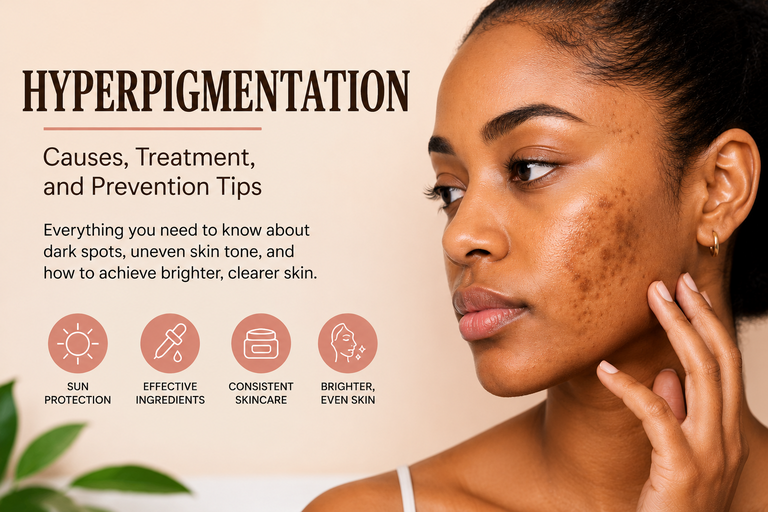
Hyperpigmentation is one of the most common skin concerns affecting people of all skin tones. It appears as patches or spots that are darker than the surrounding skin due to excess melanin production. Although hyperpigmentation is usually harmless, it can affect confidence and make the complexion appear uneven.
The good news is that with the right skincare routine, sun protection, and effective ingredients, hyperpigmentation can gradually fade over time.
What Is Hyperpigmentation?
Hyperpigmentation is a skin condition in which certain areas become darker than the surrounding skin. This happens when the skin produces too much melanin, the natural pigment responsible for skin, hair, and eye color.
Dark spots may appear on the face, hands, neck, shoulders, or any part of the body that has experienced inflammation, injury, or prolonged sun exposure.
What Causes Hyperpigmentation?
Several factors can trigger excess melanin production, including:
Sun Exposure
Ultraviolet (UV) rays stimulate melanin production. Without daily sunscreen, existing dark spots may become darker and new ones may develop.
Post Inflammatory Hyperpigmentation
Acne, eczema, burns, insect bites, cuts, and other skin injuries can leave behind dark marks after the skin heals.
Hormonal Changes
Hormonal fluctuations during pregnancy or while taking certain medications may cause melasma, a common form of hyperpigmentation that often appears on the cheeks, forehead, and upper lip.
Aging
As people age, years of sun exposure can lead to age spots, also called liver spots, especially on areas frequently exposed to sunlight.
Types of Hyperpigmentation
The three main types include:
- Post inflammatory hyperpigmentation (PIH): Dark marks left after acne or skin inflammation.
- Melasma: Hormone related pigmentation that commonly affects women.
- Sunspots: Also known as solar lentigines or age spots, these develop after repeated sun exposure.
Understanding the type of pigmentation you have helps determine the most effective treatment.
Best Skincare Ingredients for Hyperpigmentation
Several ingredients are known to improve uneven skin tone over time.
Vitamin C
Vitamin C is a powerful antioxidant that helps brighten the skin and reduce the appearance of dark spots while protecting against environmental damage.
Niacinamide
Niacinamide helps reduce excess pigment transfer within the skin while strengthening the skin barrier and improving overall tone.
Retinol
Retinol encourages faster skin cell turnover, helping faded skin replace darker, damaged cells gradually.
Azelaic Acid
Azelaic acid is effective for treating acne related pigmentation while improving skin texture and reducing inflammation.
Alpha Hydroxy Acids (AHAs)
Ingredients such as glycolic acid and lactic acid gently exfoliate the skin, allowing newer and brighter skin cells to appear.
The Importance of Sunscreen
Daily sunscreen is one of the most effective ways to prevent hyperpigmentation from getting worse.
Choose a broad spectrum sunscreen with SPF 30 or higher and apply it every morning, even on cloudy days. Reapply every two hours if you are outdoors.
Without sun protection, skincare products designed to fade dark spots may produce slower results.
Tips to Prevent Hyperpigmentation
You can lower your risk by following these simple habits:
- Wear sunscreen every day.
- Avoid picking or squeezing pimples.
- Treat acne early.
- Wear protective clothing when outdoors.
- Use gentle skincare products that do not irritate the skin.
- Be patient and consistent with your skincare routine.
When to See a Dermatologist
If dark patches appear suddenly, change rapidly, become painful, or do not improve after several months of proper skincare, consult a dermatologist.
A specialist can recommend prescription creams, chemical peels, laser treatments, or other procedures based on your skin type and the underlying cause.
Final Thoughts
Hyperpigmentation is a common skin condition, but it can be managed with the right approach. Consistent skincare, daily sunscreen, and proven ingredients such as vitamin C, niacinamide, retinol, and azelaic acid can help improve skin tone over time.
Results do not happen overnight, but patience and consistency often lead to healthier, brighter, and more even looking skin.