

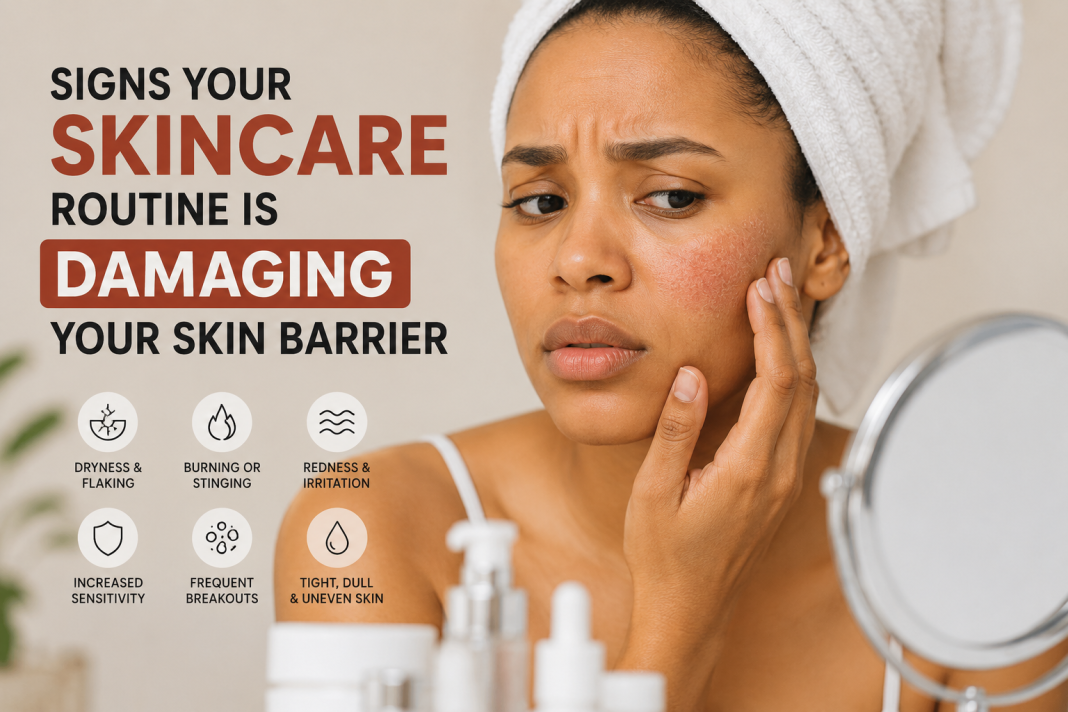
Healthy skin starts with a strong skin barrier. Your skin barrier is the outermost layer of your skin. It protects your body from bacteria, pollution, allergens, and moisture loss. When this barrier becomes damaged, your skin struggles to stay healthy, no matter how expensive your skincare products are.
Many people unknowingly weaken their skin barrier by overusing active ingredients, exfoliating too often, or combining products that should not be used together. Recognizing the early warning signs can help you repair your skin before the damage becomes severe.
What Is the Skin Barrier?
The skin barrier, also called the moisture barrier, is the outer protective layer of your skin. It keeps water inside the skin while blocking harmful substances from entering.
When the barrier is healthy, your skin feels soft, smooth, and comfortable. When it is damaged, your skin becomes vulnerable to irritation and dehydration.
Signs Your Skincare Routine Is Damaging Your Skin Barrier
1. Your Skin Feels Tight After Cleansing
Your face should feel clean after washing, not tight or stretched. Tightness often means your cleanser is stripping away your skin’s natural oils.
If your skin feels uncomfortable immediately after cleansing, it may be time to switch to a gentler cleanser.
2. Persistent Dryness and Flaking
Dry patches that do not improve with moisturizer can indicate a weakened skin barrier.
When the barrier is damaged, moisture escapes from the skin more easily, leading to dehydration and peeling.
3. Burning or Stinging When Applying Products
Products that never caused irritation before may suddenly burn or sting.
This happens because a damaged skin barrier allows ingredients to penetrate more deeply, making the skin more sensitive.
4. Increased Redness
Redness that appears after applying skincare products may be a sign of inflammation.
If your skin stays red for long periods, reduce the number of active ingredients in your routine.
5. Your Skin Has Become More Sensitive
A damaged skin barrier often reacts to products, weather changes, heat, or even plain water.
If your skin suddenly becomes sensitive without any known allergy, your skincare routine may be too harsh.
6. Frequent Breakouts
Many people assume acne only comes from oily skin. However, an impaired skin barrier can trigger inflammation that contributes to breakouts.
Over treating acne with strong products may make the situation worse.
7. Your Skin Looks Dull
Healthy skin naturally reflects light.
When your skin barrier is compromised, your complexion may appear rough, tired, and lifeless.
8. Excessive Oil Production
Ironically, damaged skin can become oilier.
When your skin loses moisture, it may produce more oil to compensate for the dryness.
9. Itching
Itchy skin is another common symptom of barrier damage.
Continuous itching may indicate that your skin is struggling to retain moisture.
10. Products Stop Working
If your favorite skincare products suddenly seem ineffective, your damaged skin barrier may be preventing your skin from responding properly.
Repairing the barrier often restores your skin’s ability to benefit from skincare.
Common Causes of Skin Barrier Damage
Several habits can weaken your skin barrier, including:
- Over exfoliating.
- Using multiple acids at the same time.
- Applying high strength retinol too often.
- Washing your face with very hot water.
- Using harsh cleansers.
- Skipping moisturizer.
- Frequently changing skincare products.
- Excessive sun exposure without sunscreen.
How to Repair Your Skin Barrier
Repairing your skin barrier takes patience.
Simplify Your Routine
Use only the essentials:
- Gentle cleanser.
- Moisturizer.
- Sunscreen during the day.
Avoid unnecessary products until your skin recovers.
Stop Over Exfoliating
Limit exfoliation to once or twice a week, depending on your skin type.
Avoid combining multiple exfoliating products.
Choose Barrier Friendly Ingredients
Look for products containing:
- Ceramides.
- Glycerin.
- Hyaluronic acid.
- Squalane.
- Panthenol.
- Colloidal oatmeal.
- Niacinamide in moderate concentrations.
These ingredients help restore hydration and strengthen the skin barrier.
Wear Sunscreen Daily
UV rays slow skin repair.
Apply a broad spectrum sunscreen with SPF 30 or higher every morning, even on cloudy days.
Give Your Skin Time
Barrier repair does not happen overnight.
Most mild cases improve within two to six weeks with a gentle skincare routine.
How to Prevent Future Skin Barrier Damage
To keep your skin healthy:
- Introduce new products one at a time.
- Avoid using several active ingredients in one routine.
- Moisturize every day.
- Use sunscreen consistently.
- Listen to your skin instead of following every skincare trend.
Finally
Your skin barrier is the foundation of healthy skin. If your skincare routine leaves your face feeling tight, irritated, flaky, or unusually sensitive, it may be causing more harm than good.
Instead of adding more products, simplify your routine and focus on repairing your skin barrier. Healthy skin is not about using the most products. It is about using the right products consistently and treating your skin with care.
Frequently Asked Questions
Can a damaged skin barrier heal itself?
Yes. Mild skin barrier damage can heal naturally with a gentle skincare routine and proper hydration.
How long does it take to repair a damaged skin barrier?
Most people notice improvement within two to six weeks, depending on the severity of the damage and how well they care for their skin.
Should I stop using retinol if my skin barrier is damaged?
Yes. Pause retinol, exfoliating acids, and other strong active ingredients until your skin has fully recovered.
Can oily skin have a damaged skin barrier?
Yes. Oily skin can still suffer from barrier damage. In fact, damaged skin may produce even more oil as it tries to compensate for moisture loss.