

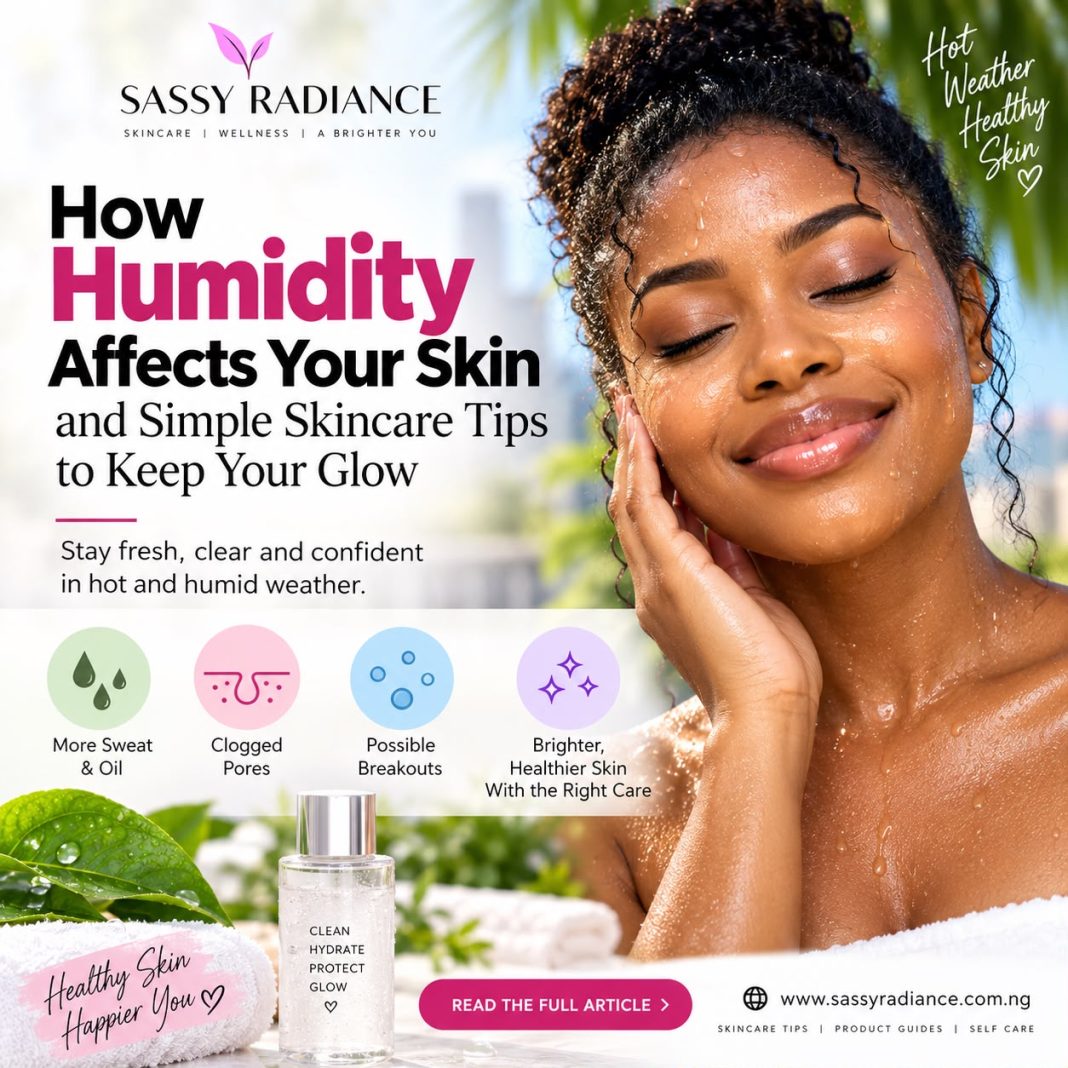
How Humidity affects your skin in several ways, especially when you live in a warm and humid climate. High humidity can increase sweating and make your skin feel oilier, but it does not mean your skin is automatically well hydrated. For some people, humid weather can contribute to clogged pores, irritation, excess shine, and breakouts.
Because humidity affects your skin differently, your skincare routine may need a few adjustments when the weather becomes hot and humid.
Here are seven skincare changes worth making.
How Humidity Affects Your Skin and Why Gentle Cleansing Matters
When humidity is high, you may sweat more throughout the day. Sweat can mix with sebum, dead skin cells, sunscreen, makeup, and other products sitting on the surface of your skin.
This buildup can make your face feel greasy and may contribute to clogged pores.
Use a gentle cleanser to remove excess oil, sweat, and impurities without stripping your skin. Cleansing too aggressively can cause dryness and irritation.
For most people, cleansing in the morning and evening is sufficient. If you exercise or sweat heavily, cleanse your face afterward when possible.
- Switch to a Lightweight Moisturizer
A humid environment does not mean you should stop moisturizing.
Your skin still needs water and moisture to maintain its protective barrier. However, heavy creams may feel uncomfortable when you are already sweating.
Consider a lightweight moisturizer with a gel or lotion texture. Choose one based on your skin type and look for products labelled non-comedogenic if you are prone to clogged pores.
The right moisturizer should leave your skin comfortable rather than excessively greasy.
- Manage Excess Oil Without Overwashing.
When humidity affects your skin, facial oil can become more noticeable.
Avoid washing your face repeatedly throughout the day simply because it feels oily. Excessive cleansing can irritate the skin and interfere with its natural barrier.
Instead, gently blot excess oil with a clean tissue or blotting paper when necessary. Continue using skincare products that suit your skin type, and follow a skincare routine for oily skin if excess oil is a recurring concern.”
- Never Skip Sunscreen
Humidity does not reduce your exposure to ultraviolet radiation.
Apply a broad-spectrum sunscreen every morning as part of your daily skincare routine. Choose a formula that feels comfortable and works well with your skin type.
If you spend extended periods outdoors or sweat heavily, reapply sunscreen according to the product instructions.
Daily sun protection helps reduce sunburn and protects your skin from cumulative ultraviolet damage.
- Clean Your Skin After Heavy Sweating
Sweating is a normal response to heat and physical activity. The problem comes when sweat remains on your skin for long periods and mixes with oil and other substances.
After exercising or spending considerable time outside, gently cleanse your face when possible.
If you cannot wash immediately, gently pat your face with a clean towel. Avoid rubbing your skin aggressively.
Also wash items that regularly touch your face, including pillowcases, towels, hats, and headbands.
- Reduce Heavy Product Layers
Hot and humid weather can make several layers of skincare feel uncomfortable.
You may not need a cleanser, multiple serums, a heavy cream, facial oil, and several other products in the same routine.
Keep your routine practical. During the day, a gentle cleanser, lightweight moisturizer, and sunscreen may be enough for many people.
If you use treatment products for acne, hyperpigmentation, or other concerns, introduce them carefully and follow the instructions for each product.
Using too many active ingredients at once can increase the risk of irritation.
- Adjust Your Routine When Your Skin Changes
Your skin can respond differently to changes in weather.
You may notice more oil, sweat, clogged pores, or irritation during periods of high humidity. Pay attention to these changes instead of continuing to use products that no longer feel comfortable.
For example, you may prefer a lighter moisturizer during humid months and a richer formula when the weather becomes cooler or drier.
Small adjustments can make your routine easier to maintain.
Can Humidity Cause Breakouts?
The way humidity affects your skin does not mean it directly causes acne in everyone.
When sweat mixes with oil, dead skin cells, makeup, sunscreen, and other products, the resulting buildup may contribute to clogged pores. People with oily or acne-prone skin may therefore notice more breakouts during hot and humid periods.
Keeping your skin clean, choosing appropriate products, and avoiding unnecessary touching or picking can help reduce factors that contribute to breakouts.
What Should You Avoid During Humid Weather?
Some skincare habits can make oily or congested skin feel worse in humid conditions.
Try to avoid:
- Washing your face excessively.
- Using harsh scrubs.
- Applying unnecessarily heavy creams.
- Layering too many skincare products.
- Sleeping with makeup on.
- Sharing towels.
- Using dirty pillowcases.
- Picking pimples.
- Skipping sunscreen because the weather feels cloudy.
Your routine does not need to become complicated simply because the weather is humid.
How to Build a Simple Routine for Humid Weather
A simple routine can help you manage your skin without overwhelming it.
Morning
- Cleanse gently.
- Apply a lightweight moisturizer if your skin needs it.
- Apply broad-spectrum sunscreen.
Evening
- Remove makeup and sunscreen.
- Cleanse gently.
- Apply your treatment product if you use one.
- Finish with a suitable moisturizer.
If your skin becomes irritated, simplify the routine and avoid introducing several new products at the same time.
When Should You See a Dermatologist?
Consider seeing a dermatologist if you experience persistent or severe acne, painful breakouts, significant irritation, swelling, intense itching, or skin changes that do not improve with basic skincare.
A dermatologist can assess your skin and recommend treatment based on the specific condition.
For more dermatologist-backed advice on caring for your skin during hot and humid weather, the American Academy of Dermatology recommends blotting sweat gently, keeping towels, headbands and hats clean, and choosing non-comedogenic skincare products to help reduce clogged pores and breakouts. You can read more from the American Academy of Dermatology.
Final Thoughts
Humidity affects your skin by changing how much you sweat and how oily or comfortable your skin feels. These changes can become more noticeable in warm, humid environments.
You can adapt by cleansing gently, choosing lightweight products, managing excess oil, wearing sunscreen, cleaning your skin after heavy sweating, and avoiding unnecessary product buildup.
The best routine is one that matches your skin type and remains simple enough for you to follow consistently.