

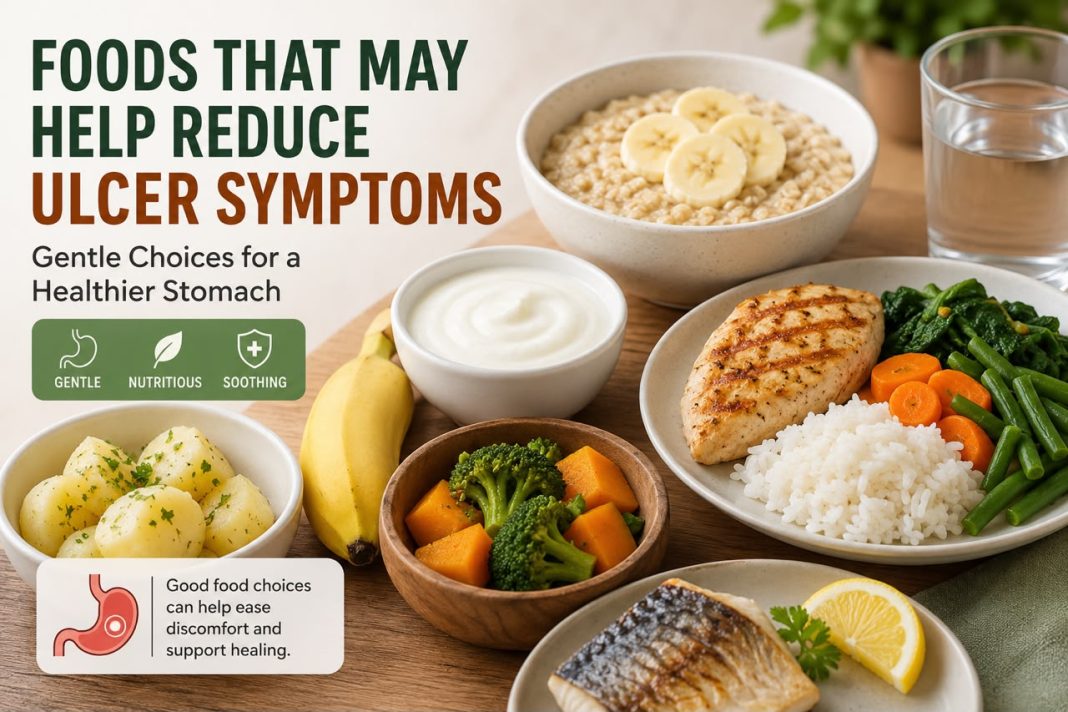
Foods that may help reduce ulcer symptoms can make meals easier to tolerate for people experiencing stomach discomfort, burning pain, nausea, bloating, or feeling unusually full after eating. Foods that may help reduce ulcer symptoms can make meals easier to tolerate for people experiencing stomach discomfort, burning pain, nausea, bloating, or feeling unusually full after eating .A peptic ulcer is an open sore that develops in the lining of the stomach or the upper part of the small intestine…Stomach discomfort, burning pain, nausea, bloating, and feeling unusually full after eating can make everyday meals difficult. If you experience ulcer symptoms, choosing foods that are gentle on your stomach may help you feel more comfortable.
Knowing which foods that may help reduce ulcer symptoms are easier for you to tolerate can make meal planning more comfortable while you receive appropriate treatment.
A peptic ulcer is an open sore that develops in the lining of the stomach or the upper part of the small intestine. The two most common causes are Helicobacter pylori (H. pylori) infection and regular use of nonsteroidal anti-inflammatory drugs (NSAIDs), such as ibuprofen, aspirin, and naproxen.
Food cannot cure a peptic ulcer. However, some foods may be easier to tolerate and may help reduce discomfort while you receive appropriate treatment.
Foods That May Help Reduce Ulcer Symptoms
- Oatmeal
Oatmeal is a nutritious source of soluble fiber and can be a gentle breakfast option for many people.
Prepare plain oatmeal with water or milk if you tolerate dairy. You can add a ripe banana for extra nutrition.
Avoid adding ingredients that you notice make your symptoms worse.
- Bananas
Bananas are soft, easy to eat, and generally less acidic than many fruits.
You can eat a ripe banana as a snack or add it to oatmeal or a smoothie. However, everyone’s digestive system responds differently, so pay attention to how your body reacts.
- Boiled Potatoes
Plain boiled potatoes can provide carbohydrates without the high fat content of fried potato dishes.
Try boiled or mashed potatoes with moderate seasoning. If greasy foods worsen your symptoms, avoid fried potatoes.
- Cooked Vegetables
Vegetables provide important vitamins, minerals, and fiber.
Some options you may tolerate include:
- Carrots
- Pumpkin
- Spinach
- Green beans
- Sweet potatoes
- Broccoli
If raw vegetables cause bloating or discomfort, try eating them cooked instead.
- Lean Protein
Protein supports muscle maintenance and overall nutrition.
Good options include:
- Skinless chicken
- Fish
- Eggs
- Turkey
- Other lean sources of protein
Choose grilled, baked, steamed, or boiled preparations instead of heavily fried foods.
- Rice and Other Mild Starches
Plain rice, potatoes, oatmeal, and other mild starches may be easier for some people to tolerate when they experience stomach discomfort.
You do not need to follow an extremely restrictive diet. Instead, aim for balanced meals and identify foods that consistently trigger your symptoms.
- Low-Fat Dairy, If You Tolerate It
Some people can comfortably consume yogurt and other low-fat dairy products.
However, dairy products do not treat ulcers. If milk or other dairy products cause bloating, discomfort, or diarrhea, choose other sources of protein and calcium.
- Water
Staying hydrated supports overall health.
Water is usually a better choice than alcohol or highly caffeinated drinks when your stomach feels irritated.
Try drinking water regularly throughout the day.
Foods and Drinks That May Worsen Ulcer Symptoms
There is no universal list of foods that everyone with an ulcer must avoid. Medical guidance does not recommend a specific ulcer diet. While foods that may help reduce ulcer symptoms can be useful for managing discomfort, it is equally important to recognize foods and drinks that may trigger your symptoms.
However, certain foods and drinks may worsen symptoms in some people.
These may include:
- Very spicy foods
- Fried or greasy foods
- Alcohol
- Coffee and other caffeinated drinks
- Carbonated drinks
- Highly acidic foods or drinks
- Foods that you personally notice trigger pain or discomfort
A simple food and symptom diary can help you identify your individual triggers.
Does Milk Heal an Ulcer?
Milk is sometimes recommended as a traditional remedy for stomach ulcers, but milk does not cure an ulcer.
It may temporarily feel soothing for some people, but it should not replace proper diagnosis and treatment.
If you have a confirmed ulcer, the underlying cause needs to be addressed.
Can Honey Cure an Ulcer?
Honey has been studied for various health effects, but there is not enough evidence to recommend honey as a replacement for medical treatment for peptic ulcers.
If you enjoy honey, you can include a small amount in your diet, but do not rely on it to treat an ulcer.
The Most Important Step Is Finding the Cause
If you have persistent or recurring ulcer-like symptoms, speak with a healthcare professional.
A healthcare professional can test for H. pylori and determine whether medications such as NSAIDs may be contributing to the problem.
When H. pylori causes an ulcer, treatment commonly involves antibiotics and acid-reducing medication. Ulcers associated with NSAID use may require changes to the medication and treatment to help the ulcer heal.
Changing your diet alone may not solve the underlying problem.
When Should You Seek Medical Help?
Speak with a healthcare professional if you experience persistent or recurring:
- Upper abdominal pain
- Nausea
- Vomiting
- Bloating
- Feeling unusually full after eating
- Indigestion
Seek urgent medical attention if you experience:
- Black or tar-like stool
- Blood in your stool
- Vomiting blood
- Vomit that looks like coffee grounds
- Sudden or severe abdominal pain
- Dizziness or fainting
- Rapid heartbeat
- Symptoms that suddenly become worse
These symptoms can indicate complications such as gastrointestinal bleeding or perforation.
Simple Meal Ideas for People With Ulcer Symptoms
If these foods agree with your body, you can try simple meals such as:
Breakfast:
Oatmeal with a ripe banana and water.
Lunch:
Rice with grilled fish and cooked vegetables.
Snack:
A ripe banana or plain yogurt, if tolerated.
Dinner:
Boiled potatoes with chicken and cooked vegetables.
The goal is to eat balanced meals while avoiding foods that consistently make your symptoms worse.
Trusted Resources for More Information
For more information about peptic ulcers, their causes, symptoms, treatment, and nutrition, readers can consult these trusted medical resources:
- National Institute of Diabetes and Digestive and Kidney Diseases, Peptic Ulcers
- Mayo Clinic, Peptic Ulcer Symptoms and Causes
- NHS, Stomach Ulcer Information and Treatment
- Eating a balanced diet is important for overall health. Read our guide on How to Manage Diabetes Naturally Alongside Medical Treatments for more information.
Final Thoughts
Including foods that may help reduce ulcer symptoms in a balanced diet may make eating more comfortable, but these foods should not replace medical treatment.
Choosing foods that are gentle on your stomach may help you manage ulcer symptoms, but food should not be considered a cure for peptic ulcers.
The most common causes are H. pylori infection and NSAID use. Treating the underlying cause is important for healing and reducing the risk of recurrence.
If you regularly experience ulcer-like symptoms, get properly evaluated instead of relying only on home remedies or dietary changes.