

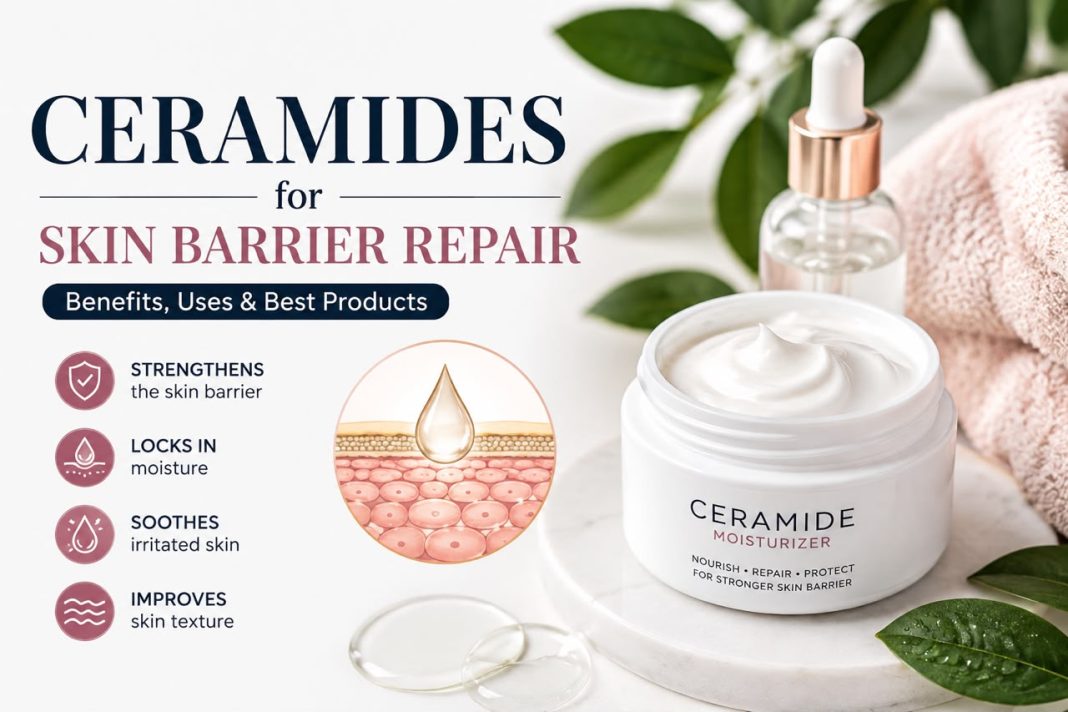
Ceramides for skin barrier repair are one of the most effective skincare ingredients for restoring a damaged skin barrier. If your skin feels dry, tight, irritated, or unusually sensitive, ceramides can help rebuild your skin’s protective layer, lock in moisture, and reduce irritation. In this guide, you’ll learn how ceramides work, their benefits, and how to choose the right ceramide products for healthier skin .If your skin feels dry, tight, irritated, or unusually sensitive, you may have a damaged skin barrier. One of the most effective ingredients for restoring it is ceramides. These naturally occurring lipids help strengthen your skin’s protective barrier, lock in moisture, and protect against environmental damage.
Ceramides for skin barrier repair help restore your skin’s natural protective barrier, making them an essential ingredient for anyone with dry or sensitive skin.
In this guide, you’ll learn how ceramides repair the skin barrier, their benefits, how to use them, and how to choose the best ceramide products.
Ceramides for Skin Barrier Repair: Benefits, Uses, and How to Choose the Right Products
What Are Ceramides?
Ceramides are lipids, or fats, that make up nearly 50% of the outer layer of your skin. They act like a protective seal between skin cells, helping your skin retain moisture while keeping out bacteria, pollutants, and irritants.
Over time, factors such as aging, harsh skincare products, over exfoliation, and sun exposure reduce your skin’s natural ceramide levels. When this happens, your skin barrier becomes weak and vulnerable.
Benefits of Ceramides for Skin Barrier Repair
Regular use of ceramides for skin barrier repair helps strengthen the skin, reduce water loss, and improve overall skin health.
Strengthens the Skin Barrier
Ceramides rebuild your skin’s natural protective layer, making it stronger and more resilient.
Prevents Moisture Loss
A healthy skin barrier locks water into the skin, keeping it soft, smooth, and hydrated.
Reduces Dryness and Flaking
Ceramides relieve dry, rough, and flaky skin by restoring lost moisture.
Soothes Irritated Skin
If your skin burns, stings, or feels sensitive after applying skincare products, ceramides can help calm irritation.
Improves Skin Texture
With regular use, ceramides leave your skin feeling smoother, healthier, and more comfortable.
Signs Your Skin Needs Ceramides
You may benefit from ceramide based skincare if you notice:
- Dry or flaky skin
- Tightness after cleansing
- Redness
- Increased sensitivity
- Rough patches
- Burning or stinging after applying skincare
- A weakened skin barrier
How to Use Ceramides in Your Skincare Routine
For the best results, apply ceramides for skin barrier repair twice daily after cleansing and before sunscreen in the morning.
Follow these simple steps for the best results:
- Cleanse your face with a gentle cleanser.
- Apply a hydrating serum if needed.
- Use a ceramide rich moisturizer to lock in hydration.
- Apply sunscreen during the day to protect your repaired skin barrier.
Using ceramides consistently every morning and evening provides the best results.
Who Should Use Ceramides?
Dermatologists often recommend ceramides for skin barrier repair for people with eczema, sensitive skin, or a damaged skin barrier.
Ceramides are suitable for almost every skin type, including:
- Dry skin
- Oily skin
- Combination skin
- Sensitive skin
- Acne prone skin
- Mature skin
They are especially helpful for people using retinol, AHAs, or BHAs because these ingredients can weaken the skin barrier over time.
How to Choose the Best Ceramide Products
When shopping for skincare, look for products containing:
- Ceramide NP
- Ceramide AP
- Ceramide EOP
- Cholesterol
- Fatty acids
- Hyaluronic acid
- Glycerin
These ingredients work together to repair the skin barrier and improve hydration.
Can You Use Ceramides with Other Skincare Ingredients?
Yes. Ceramides work well with many active ingredients, including:
- Hyaluronic acid
- Niacinamide
- Vitamin C
- Retinol
- Peptides
Pairing ceramides with these ingredients helps keep your skin hydrated while reducing irritation.
Common Mistakes to Avoid
Avoid these habits if you’re trying to repair your skin barrier:
- Over exfoliating your skin
- Using harsh cleansers
- Skipping moisturizer
- Forgetting sunscreen
- Expecting immediate results
Skin barrier repair takes time, so consistency is essential.
The National Eczema Association explains that ceramides play an important role in maintaining a healthy skin barrier and reducing moisture loss.
According to the American Academy of Dermatology (AAD), using a gentle moisturizer helps support a healthy skin barrier.
Experts at the Cleveland Clinic recommend moisturizing regularly to protect the skin barrier and prevent excessive dryness.
Conclusion
Ceramides are one of the most effective ingredients for repairing a damaged skin barrier. They restore moisture, reduce irritation, strengthen your skin’s natural defenses, and improve overall skin health. Adding a ceramide moisturizer to your daily skincare routine can help you achieve healthier, softer, and more resilient skin.
If you’re experiencing dryness or irritation, read our guide on Best Moisturizer for a Damaged Skin Barrier.
Learn how to repair oily skin in our article Skin Barrier Repair for Oily Skin.
Not sure if your skin barrier is damaged? Check out 10 Signs Your Skin Barrier Is Damaged.
You may also find our article How Long Does a Damaged Skin Barrier Take to Heal? helpful.
For a complete daily routine, read Morning vs Night Skincare Routine.
Frequently Asked Questions
What do ceramides do for the skin?
Ceramides strengthen the skin barrier, reduce moisture loss, and protect the skin from environmental damage.
Can I use ceramides every day?
Yes. Ceramides are gentle enough for daily use in both your morning and evening skincare routines.
Are ceramides good for oily skin?
Yes. They repair the skin barrier without making oily skin feel greasy.
How long does ceramides take to repair the skin barrier?
With consistent use, many people notice healthier skin within two to four weeks, although severely damaged skin may take longer.