

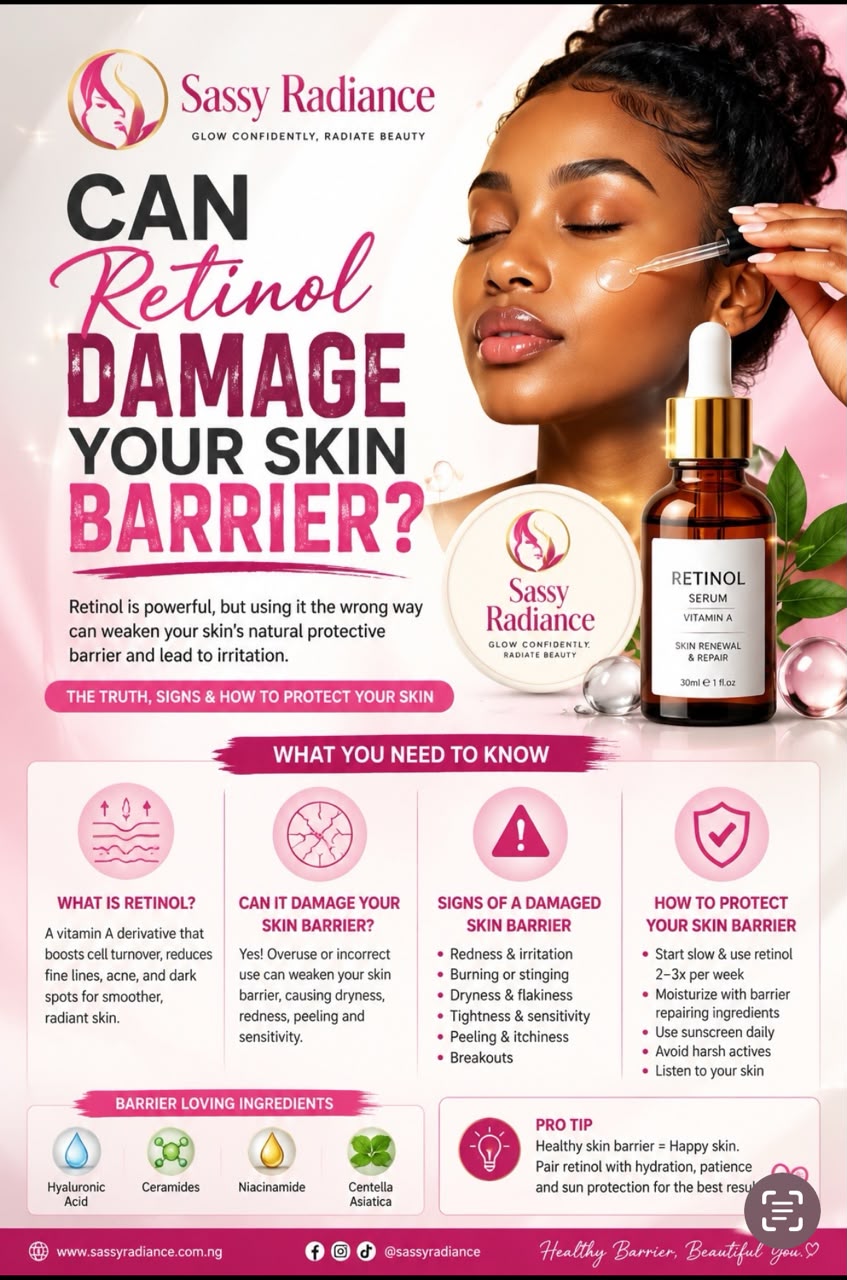
Retinol is one of the most effective skincare ingredients for reducing fine lines, acne, and uneven skin tone. However, many people wonder, can retinol damage your skin barrier? The answer is yes, but only when it is used incorrectly. Overusing retinol or introducing it too quickly can weaken your skin barrier, leading to irritation and dryness.
This guide explains how retinol affects your skin barrier, the signs of damage, and how to use it safely.
What Is Retinol?
Retinol is a vitamin A derivative commonly used in skincare to increase cell turnover and stimulate collagen production. It can improve acne, wrinkles, hyperpigmentation, and overall skin texture.
While retinol offers many benefits, it is a potent ingredient that requires careful use.
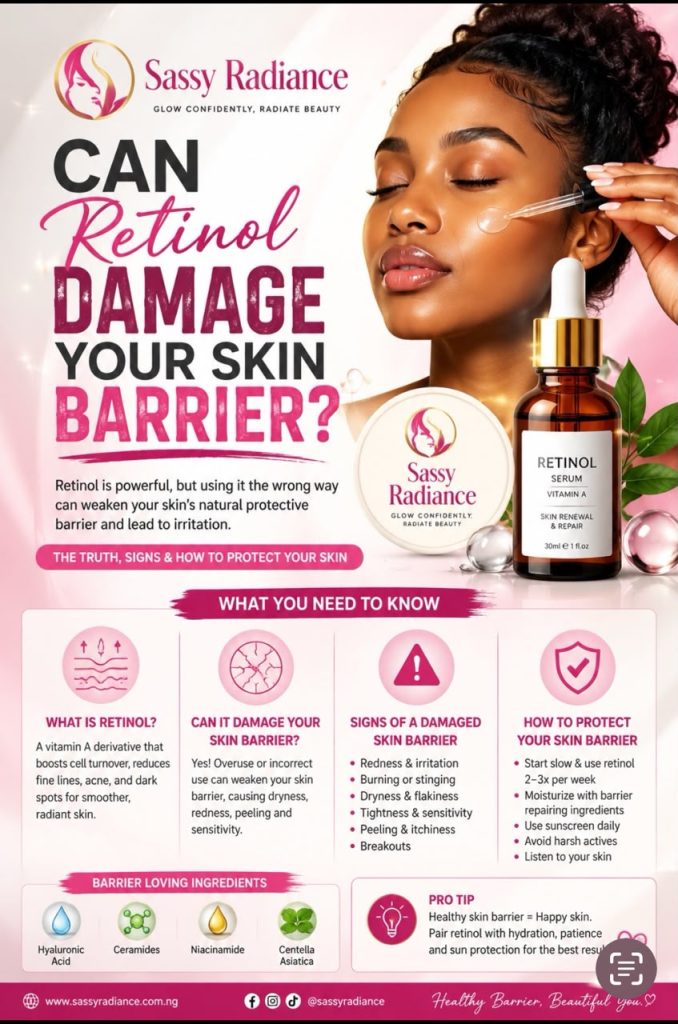
Can Retinol Damage Your Skin Barrier?
Can retinol damage your skin barrier? Yes. Retinol can temporarily weaken your skin’s protective barrier if it is used too often, in high concentrations, or without proper moisturizing.
A damaged skin barrier loses moisture more easily and becomes vulnerable to irritation, redness, and environmental stressors.
Signs Retinol Has Damaged Your Skin Barrier
Watch for these common symptoms:
- Redness
- Burning or stinging
- Dry, flaky skin
- Tightness
- Increased sensitivity
- Peeling
- Itching
- Breakouts caused by irritation
If you notice these signs, your skin barrier may need time to recover.
Why Retinol Can Damage Your Skin Barrier
Several factors increase the risk:
Using Retinol Too Often
Applying retinol every night when your skin is not accustomed to it can overwhelm the skin.
Choosing a High Strength Too Soon
Beginners should start with a lower concentration before progressing to stronger formulas.
Skipping Moisturizer
A good moisturizer helps reduce water loss and supports the skin barrier while using retinol.
Combining Too Many Active Ingredients
Using retinol alongside exfoliating acids, benzoyl peroxide, or harsh scrubs may increase irritation.
How to Use Retinol Without Damaging Your Skin Barrier
Follow these tips to protect your skin:
Start Slowly
Use retinol only two or three nights each week.
Apply Moisturizer
Choose a moisturizer rich in ceramides, glycerin, hyaluronic acid, and niacinamide.
Wear Sunscreen Daily
Retinol makes your skin more sensitive to sunlight. Apply a broad spectrum SPF 30 or higher every morning.
Avoid Harsh Products
Skip strong exfoliants until your skin adjusts to retinol.
How to Repair a Damaged Skin Barrier
If your skin becomes irritated:
- Stop using retinol for several days.
- Use a gentle cleanser.
- Apply a barrier repairing moisturizer twice daily.
- Avoid exfoliating acids.
- Protect your skin with sunscreen.
Most mild skin barrier damage improves within two to four weeks with proper care.
Frequently Asked Questions
Can retinol permanently damage your skin barrier?
No. In most cases, skin barrier damage caused by retinol is temporary and improves with proper skincare and reduced retinol use.
Should I stop using retinol if my skin is peeling?
Yes. Pause retinol until your skin recovers, then reintroduce it gradually.
Can beginners use retinol?
Yes. Beginners should choose a low strength retinol and use it only a few times each week.
According to the American Academy of Dermatology (AAD), retinoids should be introduced gradually and paired with a gentle moisturizer and sunscreen to reduce irritation and protect the skin barrier. The National Eczema Association also recommends using fragrance free moisturizers to support a healthy skin barrier.
If your skin barrier has already been affected, read our guide on How to Repair a Damaged Skin Barrier Naturally to learn practical steps for recovery. You may also find Best Moisturizer for Damaged Skin Barrier helpful when choosing products that restore hydration and strengthen your skin’s protective barrier.
Conclusion
Can retinol damage your skin barrier? Yes, but it usually happens because of overuse or incorrect application. When used properly with a gentle moisturizer and daily sunscreen, retinol remains one of the most effective skincare ingredients available.
Introduce retinol gradually, keep your skin hydrated, and pay attention to signs of irritation. A healthy skin barrier allows you to enjoy the benefits of retinol while minimizing unwanted side effects.