

Introduction
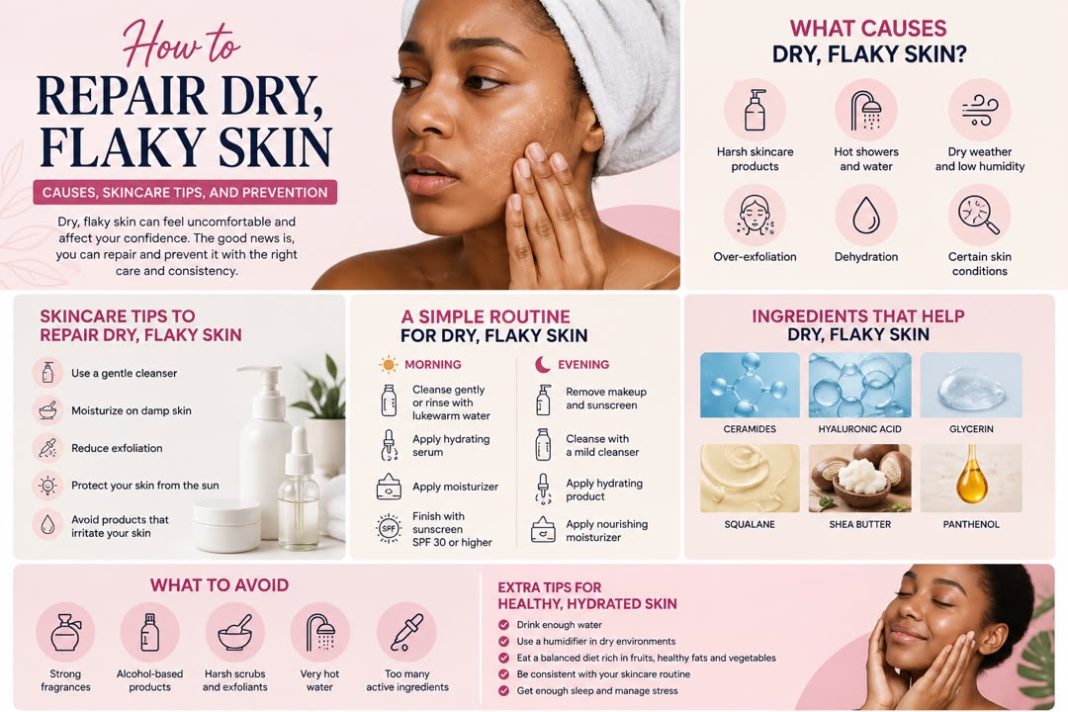
How to repair dry flaky skin starts with understanding what is causing the dryness and making simple changes to your skincare routine. If you’re wondering how to repair a damaged skin barrier, you’re not alone. A weakened skin barrier can cause dryness, redness, irritation, sensitivity, flaking, and stinging when you apply skincare products.
Knowing how to repair dry flaky skin also means understanding which products and habits may be making the problem worse.
The good news is that a damaged skin barrier can often improve with a gentle and consistent skincare routine. The key is to reduce irritation, restore moisture, and give your skin time to recover.
This guide explains what the skin barrier is, what can damage it, the signs of a damaged skin barrier, and practical ways to support healthier, hydrated skin.
How to Repair Dry Flaky Skin
Knowing how to repair dry flaky skin also means understanding which products and habits may be making the problem worse.
Knowing how to repair dry flaky skin can help you create a simple routine that improves comfort and reduces visible flaking.
If you are wondering how to repair dry flaky skin effectively, focus on gentle cleansing, regular moisturizing, and protecting your skin from irritation.
Dermatologists recommend using a gentle cleanser, applying moisturizer while the skin is damp, limiting hot showers, and protecting the skin from the sun.
To help relieve dry, flaky skin, dermatologists recommend using gentle skincare products, moisturizing regularly, avoiding very hot water, and protecting the skin from environmental factors. The American Academy of Dermatology also recommends applying moisturizer while the skin is still damp to help retain moisture.
What Is a Damaged Skin Barrier?
The skin barrier is the outermost layer of your skin. It helps keep moisture inside your skin while protecting it from external irritants.
The barrier contains skin cells and lipids, including ceramides, cholesterol, and fatty acids. When the barrier is healthy, your skin generally feels comfortable, hydrated, and balanced.
When the barrier becomes damaged, your skin may lose moisture more easily and become more sensitive to skincare products and environmental factors.
Signs of a Damaged Skin Barrier
You may have a damaged or irritated skin barrier if you notice:
- Persistent dryness
- Tightness after cleansing
- Flaking or peeling
- Redness
- Burning or stinging when applying skincare products
- Increased sensitivity
- Itching
- Rough skin texture
- Unexpected breakouts
- Skin that feels dehydrated even after moisturizing
These symptoms can occur with different skin types, including oily and acne-prone skin.
What Causes Skin Barrier Damage?
Several skincare habits and environmental factors can weaken the skin barrier.
Over-Exfoliation
Using scrubs, exfoliating acids, or other exfoliating products too frequently can irritate the skin and interfere with the barrier.
Using Too Many Active Ingredients
Combining several active ingredients, such as retinoids, alpha hydroxy acids, beta hydroxy acids, benzoyl peroxide, and vitamin C, can be irritating for some people, especially when introduced too quickly.
Harsh Cleansers
Cleansers that strip the skin’s natural oils can leave the skin feeling dry and tight. Dermatologists generally recommend gentle cleansers for sensitive or dry skin.
Hot Water
Very hot water can worsen dryness by removing some of the skin’s natural oils. Lukewarm water is a better choice when your skin is irritated or dry.
Environmental Factors
Sun exposure, cold weather, low humidity, pollution, and strong winds can contribute to dryness and irritation.
Inconsistent Moisturizing
Skipping moisturizer can make it harder to maintain adequate hydration, particularly if your skin is already dry or irritated.
How to Repair a Damaged Skin Barrier
If you want to repair a damaged skin barrier, keep your skincare routine simple and consistent.
- Simplify Your Skincare Routine
For a short period, focus on the basics:
- Gentle cleanser
- Fragrance-free moisturizer
- Broad-spectrum sunscreen
Avoid adding several new products at the same time. A simpler routine makes it easier to identify products that may be irritating your skin.
- Stop Over-Exfoliating
If your skin is burning, peeling, unusually sensitive, or irritated, consider pausing exfoliating acids and physical scrubs until your skin becomes more comfortable.
Avoid aggressive scrubbing. Once your skin has recovered, introduce exfoliating products gradually if you still need them.
- Use Barrier-Supporting Ingredients
Look for moisturizers containing ingredients such as:
- Ceramides
- Glycerin
- Hyaluronic acid
- Panthenol
- Squalane
- Colloidal oatmeal
Ceramides are particularly useful because they are naturally found in the skin’s outer layer and help support the skin barrier and reduce moisture loss.
- Moisturize Every Day
Apply moisturizer consistently, especially after cleansing.
Applying moisturizer while the skin is slightly damp can help trap moisture. Dermatologists commonly recommend moisturizing immediately after bathing or washing.
If you have oily or acne-prone skin, look for a lightweight, non-comedogenic moisturizer.
- Wear Sunscreen Daily
Use a broad-spectrum sunscreen with SPF 30 or higher during the day.
Sun protection helps reduce UV-related skin damage and protects your skin while it recovers.
- Avoid Irritating Products
While your skin is recovering, be cautious with products that contain:
- Strong fragrances
- Harsh cleansers
- Strong exfoliating acids
- Aggressive scrubs
- Strong retinoids
Fragrance-free products can be a better option when your skin is sensitive or irritated.
Best Ingredients for a Damaged Skin Barrier
Ceramides
Ceramides help support the skin barrier and reduce moisture loss.
Hyaluronic Acid
Hyaluronic acid is a humectant that helps attract and retain water in the skin.
Glycerin
Glycerin helps draw moisture toward the skin and is commonly used in hydrating skincare products.
Panthenol
Panthenol is commonly used in skincare products designed to moisturize and soothe the skin.
Squalane
Squalane can help soften the skin and reduce moisture loss.
Colloidal Oatmeal
Colloidal oatmeal is commonly used in products designed for dry and sensitive skin.
Niacinamide
Niacinamide can support the skin barrier and may help reduce redness and irritation. However, if your skin is extremely sensitive, introduce new products slowly.
How Long Does It Take to Repair a Damaged Skin Barrier?
There is no single recovery time for everyone.
A mildly irritated skin barrier may improve relatively quickly after you remove the source of irritation and return to gentle skincare. More significant irritation can take longer.
Your recovery time depends on factors such as:
- What caused the damage
- How irritated your skin is
- Your existing skin condition
- The products you use
- How consistently you follow a gentle routine
If your skin remains painful, severely irritated, cracked, or inflamed despite simplifying your routine, consider speaking with a dermatologist. Conditions such as eczema, rosacea, acne, and psoriasis can also affect the skin barrier and may require specific treatment.
Lifestyle Tips for Healthy Skin
A consistent skincare routine can help support your skin barrier.
Try to:
- Avoid very hot water
- Avoid aggressive scrubbing
- Moisturize regularly
- Protect your skin from excessive sun exposure
- Use gentle, fragrance-free products when your skin is sensitive
- Avoid introducing several new active ingredients at once
- Give irritated skin time to recover
Frequently Asked Questions
Can I repair a damaged skin barrier naturally?
Yes. You can support your skin barrier by keeping your routine gentle, avoiding unnecessary irritation, moisturizing consistently, and protecting your skin from the sun.
How do I know if my skin barrier is damaged?
Common signs include dryness, flaking, redness, tightness, burning, stinging, itching, and increased sensitivity.
Can I use niacinamide on a damaged skin barrier?
Some people tolerate niacinamide well, but irritated skin can react to many products. If your skin is very sensitive, introduce it gradually and stop if it causes irritation.
Should I stop using retinol if my skin barrier is damaged?
If retinol appears to be contributing to burning, peeling, or irritation, consider pausing it until your skin becomes comfortable again. You can discuss persistent irritation with a dermatologist.
Can oily skin have a damaged skin barrier?
Yes. Oily skin can still become dehydrated and irritated when the skin barrier is compromised.
Knowing how to repair dry flaky skin also means understanding which products and habits may be making the problem worse.
If your dry, flaky skin is also accompanied by irritation or sensitivity, your skin barrier may need extra support. Learn more about How to Repair a Damaged Skin Barrier Naturally and discover practical ways to restore, strengthen, and protect your skin.
Conclusion
Learning how to repair a damaged skin barrier starts with doing less, not adding more products. Use a gentle cleanser, moisturize consistently, protect your skin from UV exposure, and temporarily reduce products that cause irritation.
With a simple and consistent routine, your skin can gradually become more comfortable, hydrated, and resilient.