

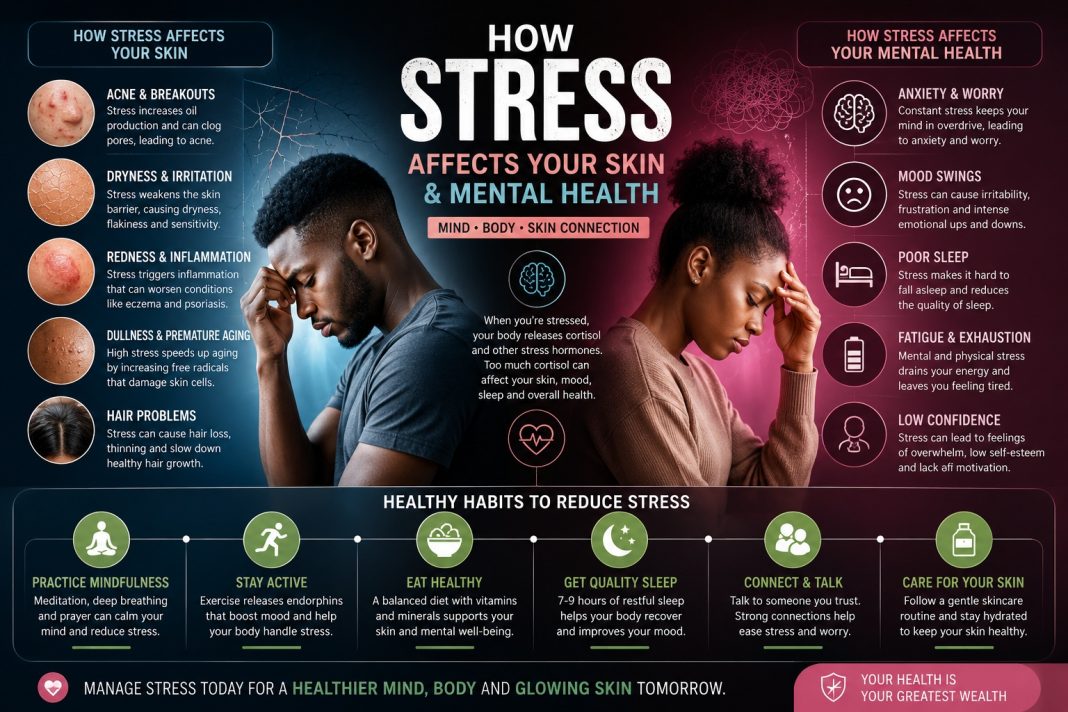
7 Ways Stress Affects Your Skin and Mental Health can help you understand how stress impacts both your skin and emotional well being.
Many people notice breakouts, dull skin, or increased sensitivity during stressful periods. At the same time, stress can contribute to anxiety, poor sleep, and emotional exhaustion. Understanding how stress affects your skin and mental health can help you take better care of your body and mind.
These 7 ways stress affects your skin and mental health can help you recognize the signs early and take steps to protect your overall well being.
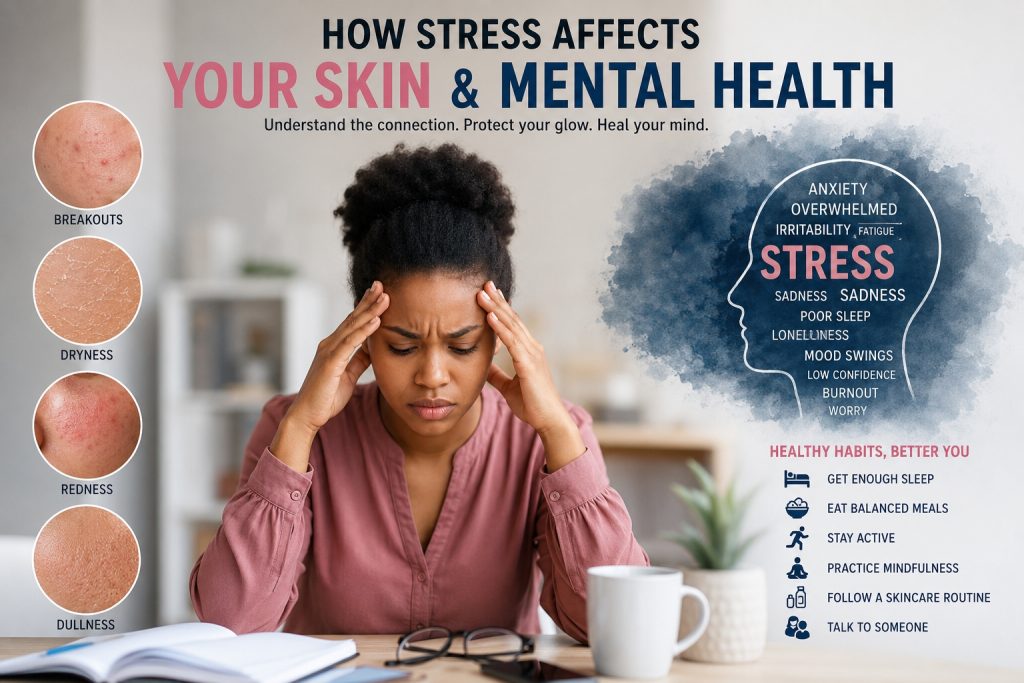
How Stress Affects Your Skin and Mental Health
When you experience stress, your body releases hormones such as cortisol. High cortisol levels can increase oil production, trigger inflammation, and weaken your skin’s natural protective barrier.
Stress also affects your emotional well being. It can reduce your ability to concentrate, disturb your sleep, and make you feel overwhelmed. Poor mental health and unhealthy skin often create a cycle where one problem makes the other worse.
7 Ways Stress Affects Your Skin and Mental Health: Hormonal Changes
Stress can appear on your skin in several ways, including:
- Acne breakouts
- Dry or flaky skin
- Redness and irritation
- Increased sensitivity
- Eczema flare ups
- Psoriasis flare ups
- Slower wound healing
- Hair thinning or excessive hair shedding
- Dark circles caused by poor sleep
These symptoms may become more noticeable during periods of prolonged stress.
How Stress Affects Your Skin and Mental Health Every Day
When you experience stress, your body releases hormones such as cortisol. High cortisol levels can increase oil production, trigger inflammation, and weaken your skin’s natural protective barrier. According to the American Academy of Dermatology, stress can contribute to acne flare ups and worsen certain skin conditions.
Long term stress can have a significant impact on your emotional and psychological health. The World Health Organization (WHO) recognizes that chronic stress can negatively affect both physical and mental well being. Common symptoms include:
- Anxiety
- Mood swings
- Irritability
- Difficulty concentrating
- Poor sleep quality
- Fatigue
- Loss of motivation
- Feelings of sadness or hopelessness
If these symptoms continue for weeks or interfere with your daily life, consider speaking with a qualified healthcare professional.
How to Reduce Stress for Healthier Skin
Improving your daily habits can help protect both your skin and mental health.
Get Enough Sleep
Aim for seven to nine hours of quality sleep every night. During sleep, your body repairs damaged skin and restores energy levels.
Eat a Balanced Diet
Choose foods rich in vitamins, antioxidants, healthy fats, and lean protein. Fresh fruits, vegetables, nuts, fish, and whole grains support healthy skin and brain function.
Stay Active
Regular exercise helps lower stress hormones while increasing endorphins, which improve mood and support overall health.
Practice Relaxation Techniques
Simple activities can reduce stress, including:
- Deep breathing
- Meditation
- Prayer
- Yoga
- Journaling
- Listening to calming music
Even ten to fifteen minutes each day can make a difference.
Follow a Gentle Skincare Routine
Avoid harsh products when your skin feels irritated. Use:
- A gentle cleanser
- A fragrance free moisturizer
- Sunscreen with SPF 30 or higher every day
If you experience persistent acne or skin conditions, consult a dermatologist.
Stay Connected
Talking with trusted family members or friends can reduce emotional stress. Social support plays an important role in maintaining mental health.
When to Seek Professional Help
Build Healthy Daily Habits
Managing stress is not about eliminating every challenge from your life. It is about developing healthy habits that help your body and mind recover each day. Drinking enough water, limiting excessive caffeine, taking regular breaks from screens, and spending time outdoors can all help reduce stress levels. Creating a consistent daily routine also supports better sleep, improves mental clarity, and helps keep your skin looking healthy. Even small lifestyle changes, when practiced consistently, can make a noticeable difference in your overall well being.
Understanding the 7 Ways Stress Affects Your Skin and Mental Health can help you take better care of your skin and reduce the effects of long term stress.
If stress causes severe anxiety, depression, panic attacks, or persistent skin problems, seek advice from a healthcare provider. Early treatment can improve both emotional well being and skin health.
If you want to build a healthier skincare routine, read our Best Vitamin C Serum in Nigeria guide and our Skincare Routine for Oily Skin article for more expert skincare tips.
Finally
Understanding the 7 ways stress affects your skin and mental health can help you manage stress, improve your skin, and support better mental health over time.