

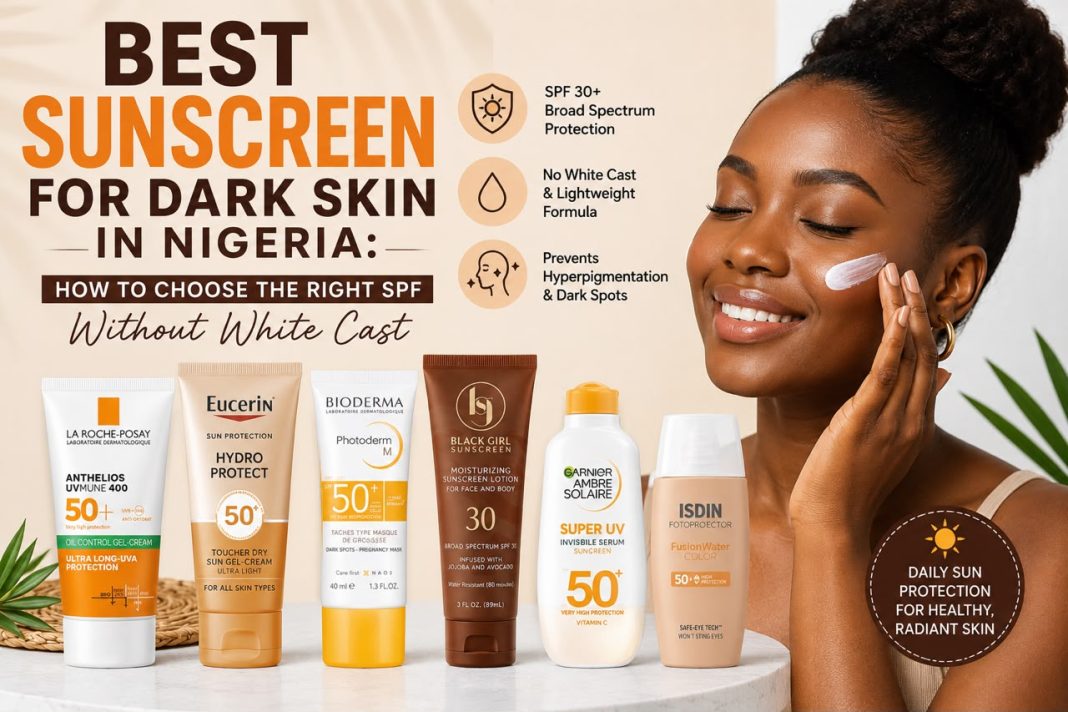
The best sunscreen for dark skin in Nigeria should provide reliable sun protection while blending comfortably into deeper skin tones. Many people with dark skin avoid sunscreen because some formulas leave a noticeable white or gray cast, feel heavy, or make the skin look oily. Choosing the right sunscreen can help protect your skin from UV damage, premature aging, and hyperpigmentation. Having dark skin does not mean you can skip sunscreen.
Melanin provides some natural protection against ultraviolet radiation, but it does not provide complete protection. Daily sunscreen remains an important part of a healthy skincare routine. Choosing the right sunscreen can be frustrating when you have dark skin. Some sunscreens leave a noticeable white or gray cast, feel heavy, make the skin look oily, or leave an uncomfortable residue.
But having dark skin does not mean you can skip sunscreen. Sun protection helps protect your skin from UV damage, premature skin aging, and hyperpigmentation. Dermatologists recommend sunscreen for people of all skin tones.
The best sunscreen for dark skin in Nigeria should provide reliable sun protection while blending comfortably into deeper skin tones.
If you have dark skin and live in Nigeria, choosing a sunscreen that provides strong protection while blending comfortably into your skin is especially important.
How to Choose the Best Sunscreen for Dark Skin in Nigeria
Why Do People With Dark Skin Need Sunscreen?
Melanin provides some natural protection against ultraviolet radiation, but it does not provide complete protection.
People with darker skin can still experience sun damage, premature aging, uneven skin tone, and hyperpigmentation. Visible light can also worsen hyperpigmentation, particularly in darker skin tones.
This makes daily sun protection an important part of a good skincare routine.
Sunscreen can also help prevent existing dark spots from becoming darker and can support the treatment of hyperpigmentation by reducing continued sun exposure.
What SPF Should You Use on Dark Skin?
Choosing the best sunscreen for dark skin in Nigeria starts with looking for SPF 30 or higher and broad-spectrum protection.
Look for a sunscreen with SPF 30 or higher.
The American Academy of Dermatology recommends using sunscreen that provides:
- SPF 30 or higher
- Broad-spectrum protection
- Water resistance
- A formula that suits your skin type
- According to the American Academy of Dermatology (AAD), people with darker skin tones should still use sunscreen because melanin does not provide complete protection from UV radiation. The AAD recommends using a broad-spectrum sunscreen with SPF 30 or higher and notes that tinted sunscreens containing iron oxides may be particularly helpful for people concerned about hyperpigmentation and white cast. The U.S. Food and Drug Administration (FDA) also recommends following sunscreen label instructions and reapplying after swimming or sweating.
What does SPF mean?
SPF measures protection against UVB radiation, which contributes to sunburn.
For example, SPF 30 filters approximately 97% of UVB radiation under standardized testing conditions. However, SPF does not mean you can stay in the sun indefinitely. Proper application and reapplication still matter.
For everyday use, SPF 30 or higher is a practical minimum.
If you are comparing the best sunscreen for dark skin in Nigeria, start with SPF 30 or higher and broad-spectrum protection. The right sunscreen should also feel comfortable enough for everyday use.
What Does Broad-Spectrum Mean?
Broad-spectrum sunscreen protects against both UVA and UVB radiation.
UVA exposure contributes to premature skin aging and pigmentation, while UVB is strongly associated with sunburn.
When shopping for sunscreen, look specifically for the words “broad spectrum” on the label.
Why Does Sunscreen Leave a White Cast on Dark Skin?
A white cast happens when sunscreen does not blend well with your skin tone and leaves a visible pale, gray, or chalky residue.
When choosing the best sunscreen for dark skin in Nigeria, look for formulas that blend easily without leaving a white or gray residue.
This can be particularly noticeable with some mineral sunscreens containing zinc oxide or titanium dioxide.
You do not have to stop using sunscreen because of this problem. Instead, look for a sunscreen designed to blend into deeper skin tones.
Choose a tinted sunscreen
Tinted sunscreens can be a good option for dark skin because the tint helps reduce the visible residue that some sunscreens leave behind.
Tinted sunscreens containing iron oxides offer an additional benefit. Iron oxides can help protect against visible light, which can contribute to hyperpigmentation in darker skin tones.
When shopping, check the ingredient list for iron oxides if pigmentation is one of your main concerns.
How to Choose the Best Sunscreen for Dark Skin in Nigeria
Instead of choosing a sunscreen simply because it has a high SPF, look at the entire formula.
- Choose SPF 30 or higher
SPF 30 provides strong everyday UVB protection when applied correctly.
If you spend extended periods outdoors, you may prefer a higher SPF, but correct application remains essential.
- Look for broad-spectrum protection
Broad-spectrum protection covers both UVA and UVB radiation.
This is important for protecting your skin from sun damage and premature aging.
- Consider a tinted formula
A tinted sunscreen can reduce white cast and may be particularly useful if you are concerned about dark spots or uneven skin tone.
For additional visible-light protection, look for a tinted formula containing iron oxides.
- Choose a lightweight formula if you have oily skin
If your skin becomes oily easily, choose a sunscreen labeled non-comedogenic or won’t clog pores.
Gel, fluid, or lightweight lotion formulas may feel more comfortable than rich creams.
- Choose hydrating formulas for dry skin
If your skin is dry or easily irritated, look for moisturizing ingredients such as glycerin, hyaluronic acid, or ceramides.
Your sunscreen should feel comfortable enough that you will use it consistently.
- Consider water resistance
If you sweat heavily, exercise outdoors, or spend time swimming, choose a water-resistant sunscreen.
Remember that water-resistant does not mean waterproof. Sunscreen still needs to be reapplied according to the product instructions, especially after swimming or heavy sweating.
How to Apply Sunscreen Correctly
Even an excellent sunscreen will not provide the expected protection if you do not apply enough.
Apply sunscreen generously to all exposed areas of skin.
For your face, neck, ears, and other exposed areas, make sure you do not leave uncovered patches.
Apply sunscreen before going outdoors. The American Academy of Dermatology recommends applying sunscreen about 15 minutes before sun exposure.
When should you reapply sunscreen?
When you are outdoors, reapply approximately every two hours, or sooner after swimming or heavy sweating.
If you spend most of your day indoors and away from direct sunlight, your routine may differ from someone who works outdoors. However, daily sun protection remains useful, particularly if you regularly spend time outside.
Sunscreen and Hyperpigmentation
If you struggle with dark spots, acne marks, or uneven skin tone, sunscreen should be part of your routine.
Sun exposure can make hyperpigmentation more noticeable and can contribute to the persistence of dark spots. Consistent sun protection helps reduce continued exposure while your skin works through the pigmentation process.
For darker skin tones, a tinted sunscreen containing iron oxide can provide additional protection against visible light, which is relevant to hyperpigmentation.
However, sunscreen alone may not treat every cause of pigmentation. Persistent or unusual pigmentation should be assessed by a qualified dermatologist.
Common Sunscreen Mistakes to Avoid
Using sunscreen only when it is sunny
UV exposure does not disappear simply because the sky looks cloudy. Make sunscreen part of your regular daytime skincare routine.
Using too little sunscreen
A thin layer may not provide the protection stated on the label.
Applying it only to your face
Remember your neck, ears, hands, and other exposed areas.
Choosing SPF without checking the rest of the label
SPF is important, but also look for broad-spectrum protection and water resistance.
Avoiding sunscreen because of white cast
Instead, look for tinted formulas or products specifically designed to blend into deeper skin tones.
Forgetting to reapply
One morning application may not provide protection throughout a long day outdoors.
Can You Wear Makeup Over Sunscreen?
Yes. Sunscreen can sit underneath makeup.
Allow your sunscreen to settle before applying makeup. If you use tinted sunscreen, you may also find that it works as a light complexion product while providing sun protection.
Remember that makeup with SPF should not automatically replace your dedicated sunscreen unless you apply enough of the product to achieve the labeled protection.
Other Ways to Protect Dark Skin From the Sun
Sunscreen works best as part of a broader sun-protection routine.
You can also:
- Seek shade when possible.
- Wear protective clothing.
- Use a wide-brimmed hat when spending extended time outdoors.
- Wear sunglasses with UV protection.
- Limit prolonged direct sun exposure.
These measures are particularly useful if you spend a lot of time outdoors.
When choosing the best sunscreen for dark skin in Nigeria, consider your skin type, daily sun exposure, pigmentation concerns, and whether the formula leaves a white cast.
If you want to build a complete skincare routine, explore our guide to skincare for dark skin for practical tips on caring for melanin-rich skin. If you have oily skin, our guide to best sunscreen for oily skin in Nigeria can help you choose a suitable sunscreen for your skin type. You can also learn how to repair a damaged skin barrier naturally, especially if your skin feels irritated or sensitive. For persistent dark spots and uneven skin tone, read our guide on hyperpigmentation causes, treatment, and prevention.
Final Thoughts
The best sunscreen for dark skin in Nigeria should provide strong UV protection while feeling comfortable on your skin.
The best sunscreen for dark skin in Nigeria is not necessarily the sunscreen with the highest SPF or the most expensive formula.
Look for SPF 30 or higher, broad-spectrum protection, water resistance, and a formula that blends comfortably into your skin. If white cast and hyperpigmentation are concerns, consider a tinted sunscreen containing iron oxides.
Most importantly, choose a sunscreen you enjoy using consistently. A sunscreen that feels comfortable, does not leave an obvious cast, and fits your skin type is much easier to use every day.
Consistent sun protection can help you maintain an even-looking complexion while protecting your skin from long-term sun damage.
Frequently Asked Questions
What is the best SPF for dark skin?
SPF 30 or higher is recommended. Choose broad-spectrum protection, and consider a tinted formula if you are concerned about hyperpigmentation or white cast.
Does dark skin really need sunscreen?
Yes. Dark skin contains more melanin, but melanin does not provide complete protection from UV radiation. Sunscreen can help protect against sun damage, premature aging, and hyperpigmentation.
How can I prevent sunscreen from leaving a white cast?
Try a tinted sunscreen that matches your skin tone. Tinted formulas can reduce visible residue, and those containing iron oxides may also provide protection against visible light.
Is tinted sunscreen better for dark skin?
It can be particularly useful for people with darker skin who experience hyperpigmentation or dislike white cast. Look for SPF 30 or higher, broad-spectrum protection, water resistance, and iron oxide if visible-light protection is a priority.
How often should I reapply sunscreen?
When outdoors, reapply about every two hours and after swimming or heavy sweating. Follow the specific instructions on your sunscreen label.
Can I use sunscreen if I have oily skin?
Yes. Look for a lightweight, non-comedogenic formula that will not clog pores.