

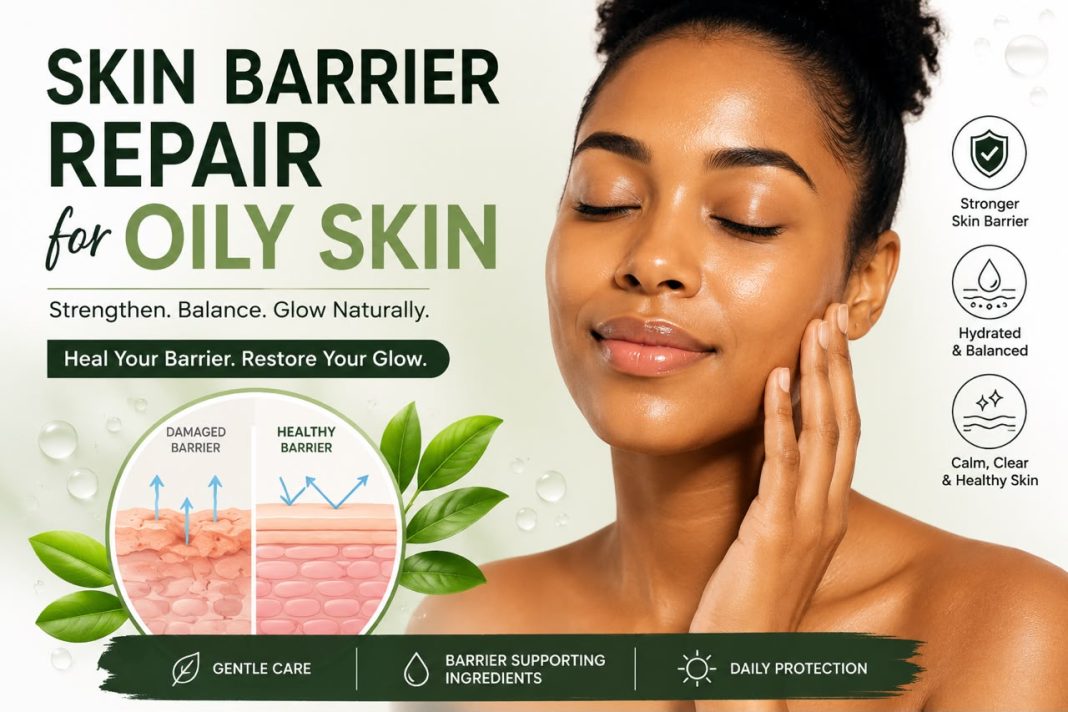
Skin barrier repair for oily skin is essential for maintaining healthy, balanced, and resilient skin. Although oily skin produces excess sebum, it can still develop a damaged skin barrier due to harsh cleansers, over exfoliation, and strong acne treatments. When the skin barrier becomes weak, it often leads to irritation, dehydration, increased oil production, and frequent breakouts. Understanding how to repair and protect your skin barrier can help restore your skin’s natural balance and improve its overall appearance. Your skin barrier is your body’s first line of defense. It protects your skin from bacteria, pollution, and moisture loss. Many people with oily skin assume they don’t need to worry about their skin barrier, but that is not true. Over cleansing, harsh acne treatments, and frequent exfoliation can damage the skin barrier, leading to irritation, dehydration, and even increased oil production.
If your skin feels oily and tight at the same time, your skin barrier may need repair. This guide explains how to restore a damaged skin barrier while managing excess oil.
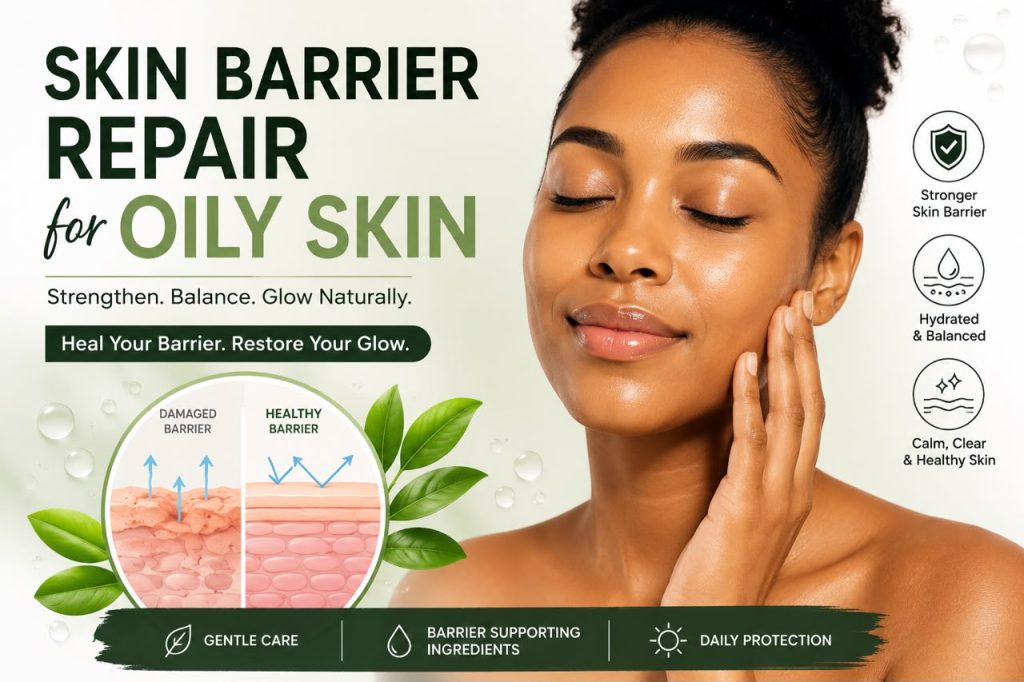
Skin Barrier Repair for Oily Skin: What Is It?
- Skin barrier repair for oily skin starts with using gentle skincare products that protect your skin’s natural moisture barrier.
- Consistency is important because skin barrier repair for oily skin takes time, especially after using harsh acne treatments.
- The best products for skin barrier repair for oily skin contain ceramides, niacinamide, and hyaluronic acid.
- If you experience redness, irritation, or excessive oil production, skin barrier repair for oily skin should become your top skincare priority.
- A simple daily routine focused on skin barrier repair for oily skin can reduce breakouts and improve overall skin texture.
- Dermatologists recommend skin barrier repair for oily skin before introducing strong exfoliants or retinoids into your routine.
- Long term skin barrier repair for oily skin helps strengthen your skin’s defenses and maintain a healthy, balanced complexion.
What Is the Skin Barrier?
The skin barrier is the outermost layer of your skin. It is made up of skin cells and natural lipids that work together to lock in moisture and keep harmful substances out.
A healthy skin barrier helps your skin:
- Retain moisture.
- Protect against bacteria and pollution.
- Reduce sensitivity.
- Maintain a balanced oil level.
- Heal faster from acne and irritation.
Signs of a Damaged Skin Barrier
If you have oily skin, watch for these symptoms:
- Excessive oiliness.
- Dry or flaky patches.
- Redness and irritation.
- Burning after applying skincare products.
- Frequent breakouts.
- Increased skin sensitivity.
- Tightness after washing your face.
These signs often appear after using strong acne products or over exfoliating.
Common Causes of Skin Barrier Damage
Several habits can weaken your skin barrier, including:
- Washing your face too often.
- Using harsh cleansers with sulfates.
- Applying high concentrations of acids every day.
- Overusing retinol or benzoyl peroxide.
- Skipping moisturizer because your skin is oily.
- Excessive sun exposure without sunscreen.
How to Repair Your Skin Barrier
- Use a Gentle Cleanser
Choose a mild, fragrance free cleanser that removes dirt without stripping your skin’s natural oils. Wash your face only twice daily unless advised otherwise by a dermatologist.
- Moisturize Every Day
Oily skin still needs hydration. A lightweight, non comedogenic moisturizer helps restore the skin barrier and prevents excessive oil production.
Look for ingredients such as:
- Ceramides
- Glycerin
- Hyaluronic acid
- Squalane
- Panthenol
- Reduce Active Ingredients
If your skin is irritated, pause strong exfoliating acids and reduce the use of retinol or benzoyl peroxide until your skin recovers.
- Wear Sunscreen Daily
UV rays can weaken the skin barrier. Use a broad spectrum sunscreen with SPF 30 or higher every morning, even on cloudy days.
- Avoid Over Exfoliation
Limit chemical exfoliation to one or two times per week if your skin tolerates it. Over exfoliating can increase inflammation and worsen oil production.
- Stay Hydrated
Drink enough water and eat foods rich in healthy fats, vitamins, and antioxidants to support skin repair from within.
Best Ingredients for Oily Skin Barrier Repair
When shopping for skincare products, choose formulas containing:
- Ceramides to strengthen the skin barrier.
- Niacinamide to reduce oil production and redness.
- Hyaluronic acid for lightweight hydration.
- Panthenol to calm irritated skin.
- Centella Asiatica to soothe inflammation.
- Squalane to restore moisture without clogging pores.
These ingredients help repair damaged skin while keeping oily skin balanced.
Ingredients to Avoid During Skin Barrier Repair
While your skin heals, avoid products with:
- High amounts of alcohol.
- Strong fragrances.
- Harsh physical scrubs.
- Excessive use of salicylic acid.
- Daily glycolic acid peels.
- Multiple active ingredients in one routine.
Keeping your routine simple allows your skin barrier to recover faster.
A Simple Skin Barrier Repair Routine for Oily Skin
Morning
- Gentle cleanser.
- Hydrating serum with hyaluronic acid.
- Lightweight moisturizer.
- Broad spectrum SPF 30 or higher.
Evening
- Gentle cleanser.
- Niacinamide or panthenol serum.
- Ceramide rich moisturizer.
Once your skin feels healthy again, slowly reintroduce acne treatments one at a time.
Can Oily Skin Have a Weak Skin Barrier?
Yes. Oily skin can still become dehydrated and sensitive. When the skin barrier is damaged, your skin may produce even more oil to compensate for moisture loss. Repairing the barrier often helps reduce excess shine and improves overall skin health.
Frequently Asked Questions
How long does skin barrier repair take?
Most people notice improvement within two to six weeks, depending on the severity of the damage and how consistent they are with their skincare routine.
Should I stop using acne treatments?
If your skin is irritated, reducing or temporarily pausing strong acne treatments may help your barrier recover. Reintroduce them gradually once your skin improves.
Can niacinamide repair the skin barrier?
Yes. Niacinamide supports barrier function, reduces redness, controls excess oil, and improves overall skin texture.
For more information about maintaining a healthy skin barrier and choosing the right skincare routine, visit the American Academy of Dermatology (AAD) .The AAD provides dermatologist reviewed guidance on skin barrier care, moisturizers, acne treatment, and sun protection to help you make informed skincare decisions.
To build a complete skincare routine, explore these related guides on Sassy Radiance:
- How to Repair a Damaged Skin Barrier Naturally:
- Skincare Routine for Oily Skin
- Hormonal Acne Treatment:
Final Thoughts
Repairing your skin barrier is one of the best ways to achieve healthier oily skin. Focus on gentle cleansing, lightweight hydration, barrier supporting ingredients, and daily sun protection. With patience and a consistent routine, your skin can become stronger, calmer, and less prone to irritation and breakouts.
If you are looking for skincare products that support skin barrier repair for oily skin, explore the carefully selected collection at Sassy Radiance to build a routine that keeps your skin healthy and balanced.